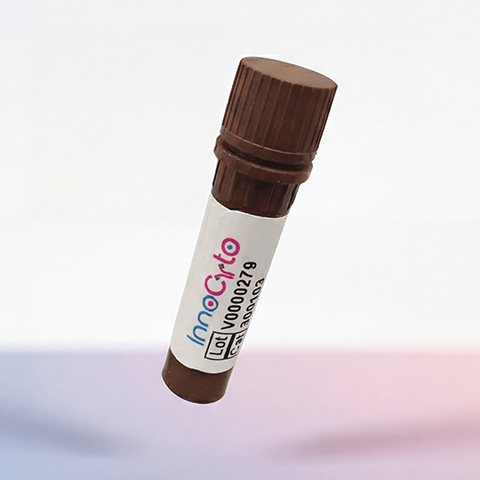
Ifanatamab, also known as Ifinatamab deruxtecan or DS-7300a, is a humanized monoclonal antibody belonging to the immunoglobulin G1 kappa (IgG1κ) subclass. It is engineered to recognize and bind to the human B7-H3 (CD276) cell surface glycoprotein, a member of the B7 family involved in immune regulation and intercellular signaling. As a therapeutic, the Ifanatamab molecule is part of an antibody–drug conjugate (ADC) system, where the IgG1 antibody is covalently linked to a cytotoxic topoisomerase I inhibitor, deruxtecan, via a cleavable peptide-based linker. The complete conjugate typically displays a molecular weight near 150 kilodaltons (kDa) and maintains the classical Y-shaped antibody configuration.
The antibody portion of Ifanatamab consists of two heavy chains and two light chains joined by disulfide bonds. The variable (VH and VL) domains form the antigen-binding regions, containing complementarity-determining regions (CDRs) that confer high specificity toward epitopes on the extracellular domains of B7-H3. The binding mechanism involves non-covalent interactions, including hydrogen bonds and hydrophobic contacts, ensuring nanomolar-level affinity. Upon binding to B7-H3 on the cell surface, the ADC-antigen complex undergoes receptor-mediated endocytosis, transporting the conjugate into the lysosomal compartment of the target cell.
The Fc (fragment crystallizable) region of the IgG1 backbone supports molecular stability and prolonged half-life by engaging neonatal Fc receptors (FcRn), while maintaining minimal immune effector activation.
InnoCyto biosimilars are research-grade recombinant antibodies or proteins engineered to closely replicate the sequence, structure, and target-binding activity of approved or well-characterized therapeutic antibodies (e.g., checkpoint inhibitors, anti-cytokine biologics). They are intended for research use to study the mechanism of action, efficacy, and combination potential of these therapeutic classes without the cost or access restrictions of clinical-grade material.
How similar are these biosimilars to the original therapeutic antibody?
Each biosimilar is produced using the published or inferred variable region sequence of the reference therapeutic and is expressed recombinantly to match the parent antibody's target specificity, isotype, and general binding profile. While designed for high functional similarity, InnoCyto biosimilars are for research use only and are not clinically validated equivalents of the approved drug product.
Are these antibodies suitable for in vivo studies?
Yes. InnoCyto biosimilars are manufactured with the same low-endotoxin, azide-free, carrier-free standards used across our in vivo product lines, making them suitable for animal efficacy, combination, and mechanism-of-action studies. Product pages indicate whether a given biosimilar is validated for in vivo use, in vitro use, or both.
What is the difference between a biosimilar and a recombinant "research antibody" targeting the same protein?
A biosimilar is specifically designed to mimic a known, named therapeutic antibody (matching its clinical target epitope and mechanism), whereas a general recombinant research antibody may target the same protein but bind a different epitope or lack the same functional properties. Biosimilars are the right choice when your study is benchmarking against, or modeling the action of, an approved or clinically studied biologic.
What quality and purity standards do biosimilar antibodies meet?
All biosimilars undergo the same rigorous QC pipeline as our other antibody lines: ≥95% purity by SDS-PAGE/SEC-HPLC, low-endotoxin testing via LAL assay, and binding/functional validation against the intended target. Certificates of Analysis (CoA) are provided per lot with full specifications.
Which therapeutic targets and mechanisms are covered in the Biosimilar line?
The line spans major immuno-oncology and immunology targets, including immune checkpoint pathways (e.g., PD-1/PD-L1, CTLA-4), cytokine and cytokine-receptor blockers, and other clinically relevant mechanisms. See each product page for the specific reference therapeutic and mechanism of action represented.
Have a product or application question? Consult our FAQs or contact us.