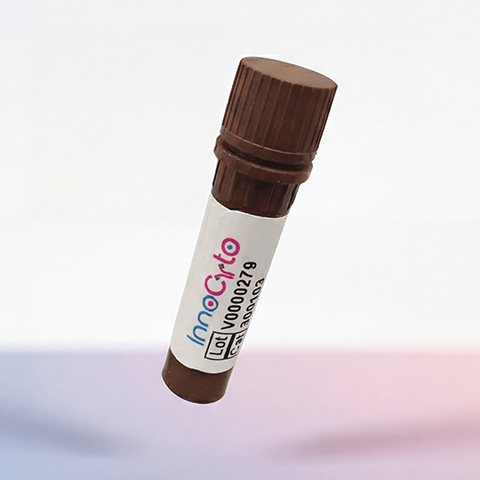
| Cat # | Size | Price | Quantity | |
|---|---|---|---|---|
| 503801 | 1 mg | $250 | ||
| 503802 | 5 mg | $750 | ||
| 503803 | 20 mg | $2500 |
| Clone | Mogamulizumab |
|---|---|
| Application | Flow cytometry, animal model study |
| Host Species | Mammalian cells |
| Reactivity | Human |
| Format | Liquid |
| Product Description | Mogamulizumab Biosimilar, CCR4 Monoclonal Antibody |
| Isotype | Human IgG1 |
| Regulatory Status | RUO |
| Clonality | Recombinant |
| Immunogen | Human CCR4 |
| Species specificity | Human |
| Purity | >95% by reducing SDS-PAGE |
| Grade | In vivo |
| Storage Conditions | 4ºC |
| Maximal Shelf Life | 12 months |
| Synonyms | CD194 |
| RRID | AB_3739314 |
| Target Name | CCR4, CD194, CD-194, CKR4, K5-5, ChemR13, CMKBR4 |
| Antibody Type | Recombinant |
| Research Areas | Chemokine receptors, Th2 cells, Tregs, Basophils, Monocytes, NK cells, Asthma, Allergy, Cancer Marker, Chemotaxis |
| See All Formats | Clone Mogamulizumab |
Mogamulizumab is a humanized monoclonal antibody belonging to the immunoglobulin G1 kappa (IgG1κ) subclass, engineered to specifically recognize and bind to the CC chemokine receptor 4 (CCR4). Structurally, Mogamulizumab is a glycoprotein with a molecular mass of approximately 149 kilodaltons (kDa). It consists of two identical heavy chains and two identical light chains joined by disulfide bonds, forming the typical Y-shaped antibody structure. Produced in mammalian expression systems such as Chinese Hamster Ovary (CHO) cells, it undergoes controlled post-translational modifications to ensure proper folding, stability, and glycosylation patterns essential for its biological function.
The variable regions of Mogamulizumab (the antigen-binding (Fab) fragments) contain complementarity-determining regions (CDRs) responsible for high-affinity recognition of CCR4, which is a seven-transmembrane G protein–coupled receptor expressed on specific subsets of immune cells. These CDRs were derived from murine antibody sequences and grafted onto a human IgG1 framework to preserve target specificity while minimizing nonhuman structural elements. Mogamulizumab is uniquely designed with a defucosylated Fc (fragment crystallizable) region, created through glycoengineering to remove fucose residues from the Fc-linked N-glycan at asparagine 297. This modification significantly enhances the antibody’s binding affinity to Fc gamma receptor IIIa (FcγRIIIa) on effector cells such as natural killer (NK) cells, thereby amplifying antibody-dependent cellular cytotoxicity (ADCC) in in vitro systems.
Functionally, upon binding to CCR4 on target cells, Mogamulizumab can trigger immune effector mechanisms such as ADCC and complement-dependent cytotoxicity (CDC), leading to targeted cell elimination in experimental models. Beyond its cytotoxic potential, CCR4 binding may alter receptor-mediated signaling and downstream chemotactic responses. The Fc–FcRn (neonatal Fc receptor) interaction provides extended serum half-life and molecular stability through recycling.
Anti-Human CCR4 (Mogamulizumab Biosimilar) TDS
Anti-Human CD4 Antibody, Clone 004AB
iF488 Anti-Human CD4 Antibody, Clone OKT4-Rec
iF647 Anti-Human CD4 Antibody, Clone OKT4-Rec
PE Anti-Human CD4 Antibody, Clone RPA-T4
Have a product or application question? Consult our FAQs or contact us.