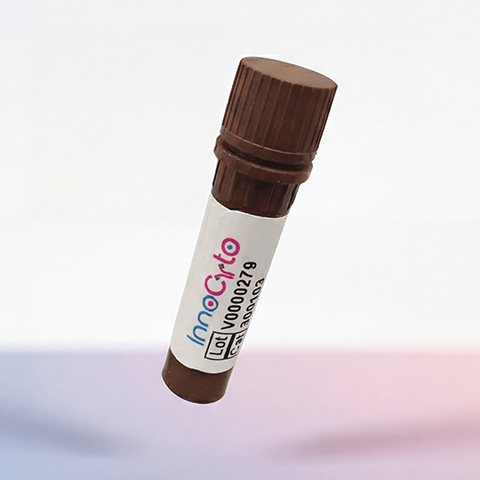
| Cat # | Size | Price | Quantity | |
|---|---|---|---|---|
| 504301 | 1 mg | $250 | ||
| 504302 | 5 mg | $750 | ||
| 504303 | 20 mg | $1800 |
| Clone | Obinutuzumab |
|---|---|
| Application | Flow cytometry, animal model study |
| Host Species | Mammalian cells |
| Reactivity | Human |
| Format | Liquid |
| Product Description | Obinutuzumab Biosimilar, CD20 Monoclonal Antibody |
| Isotype | Human IgG1 |
| Regulatory Status | RUO |
| Clonality | Recombinant |
| Immunogen | Human CD20 |
| Species specificity | Human |
| Purity | >95% by reducing SDS-PAGE |
| Grade | In vivo |
| Storage Conditions | 4ºC |
| Maximal Shelf Life | 12 months |
| RRID | AB_3739319 |
| Target Name | CD20, MS4A-1 |
| Antibody Type | Recombinant |
| Research Areas | B cells, Cancer Marker |
| See All Formats | Clone Obinutuzumab |
Obinutuzumab is a humanized monoclonal antibody belonging to the immunoglobulin G1 (IgG1) subclass, engineered to selectively target the CD20 antigen found on the surface of B lymphocytes. Structurally, Obinutuzumab is a glycoprotein with a molecular weight of approximately 150 kilodaltons (kDa), consisting of two identical heavy chains and two identical light chains linked by interchain disulfide bonds, forming the classic Y-shaped structure typical of antibodies. The molecule is produced in genetically modified mammalian expression systems and features controlled glycosylation designed to enhance its functional properties, particularly its effector interactions.
Obinutuzumab’s antigen-binding (Fab) regions contain variable domains derived from murine antibodies that confer specificity for a unique epitope on the extracellular loop of CD20, distinct from those recognized by earlier anti-CD20 antibodies. The complementarity-determining regions (CDRs) within the variable heavy (VH) and variable light (VL) domains mediate high-affinity binding through a combination of hydrophobic and electrostatic interactions. Once bound to CD20, Obinutuzumab stabilizes the receptor in specific conformations that promote direct signaling effects and induce target-cell death. This antibody is classified as a type II anti-CD20 molecule, meaning that it minimally triggers CD20 redistribution into lipid rafts and instead facilitates programmed cell death mechanisms such as actin reorganization and lysosomal disruption in vitro.
The Fc (fragment crystallizable) portion of Obinutuzumab is glycoengineered to lack core fucose residues on the N-linked oligosaccharides attached to the CH2 domains. This defucosylation increases its affinity for Fc gamma receptor IIIa (FcγRIIIa) on natural killer (NK) cells, significantly enhancing antibody-dependent cellular cytotoxicity (ADCC) compared with non-engineered IgG1 antibodies. The Fc region also interacts with the neonatal Fc receptor (FcRn), extending systemic half-life through recycling. Overall, Obinutuzumab exemplifies advanced antibody bioengineering—integrating optimized antigen binding, glycoform tuning, and Fc-mediated effector enhancement to study B-cell targeting and immune signaling mechanisms in molecular research.
Anti-Human CD20 (Obinutuzumab Biosimilar) TDS
Anti-Human CD19 Antibody, Clone HIB19
iF560 Anti-Human CD19 Antibody, Clone HIB19
iF647 Anti-Human CD19 Antibody, Clone 019AM2b
Biotin Anti-Human CD19 Antibody, Clone 019AM2b
PE Human CD20 Protein (TrxA tag)
APC Human CD20 Protein (TrxA tag)
Anti-Human CD20 Antibody, Clone 020AR1
iF488 Anti-Human CD20 Antibody, Clone 020AR1
PE Anti-Human CD20 Antibody, Clone 2H7
Have a product or application question? Consult our FAQs or contact us.