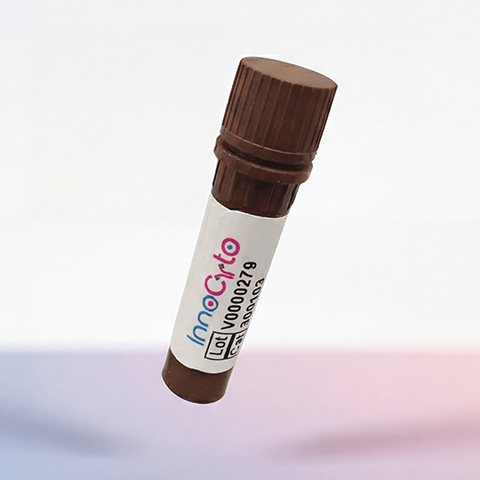
| Cat # | Size | Price | Quantity | |
|---|---|---|---|---|
| 501801 | 1 mg | $175 | ||
| 501802 | 5 mg | $590 | ||
| 501803 | 20 mg | $1390 |
| Clone | Daratumumab |
|---|---|
| Application | Flow cytometry, animal model study |
| Host Species | Mammalian cells |
| Reactivity | Human |
| Format | Liquid |
| Product Description | Anti-Human CD38 (Daratumumab Biosimilar) |
| Isotype | Human IgG1 |
| Regulatory Status | RUO |
| Clonality | Recombinant |
| Immunogen | Human CD38 |
| Species specificity | Human |
| Purity | >95% by reducing SDS-PAGE |
| Grade | In vivo |
| Storage Conditions | 4ºC |
| Maximal Shelf Life | 12 months |
| Target Name | CD38, gp45, Cyclic ADP-ribose hydrolase 1,T10, ADP-ribosyl cyclase |
| Antibody Type | Recombinant |
| Research Areas | Cancer Marker, T cells, B cells, NK cells, Monocytes, Macrophages, Plasma cells |
| See All Formats | Clone Daratumumab |
Daratumumab is a fully human monoclonal antibody belonging to the immunoglobulin G1 kappa (IgG1κ) subclass. It was developed using recombinant DNA technology and produced in mammalian expression systems such as Chinese Hamster Ovary (CHO) cells to maintain human-like post-translational modifications including glycosylation and disulfide linkage formation. The molecule has a molecular weight of approximately 148 kilodaltons (kDa) and consists of two identical heavy chains and two identical light chains connected by disulfide bonds, forming the canonical Y-shaped IgG antibody structure. Each heavy chain contains one variable (VH) and three constant (CH1–CH3) domains, while each light chain contains one variable (VL) and one constant (CL) domain.
The antigen-binding sites of Daratumumab are located within the complementarity-determining regions (CDRs) of the VH and VL domains, which confer specificity toward CD38, a transmembrane glycoprotein expressed at varying densities on many cell types. The binding interface between Daratumumab and CD38 is characterized by high-affinity interactions involving hydrogen bonding, hydrophobic forces, and electrostatic complementarity. Structural studies have shown that Daratumumab binds to a conformational epitope on CD38 composed of both protein and carbohydrate residues, highlighting its precise steric complementarity with the target antigen. This interaction enables the antibody to influence CD38’s enzymatic and receptor-mediated functions in experimental models, such as those modulating calcium signaling and cellular adhesion.
The Fc (fragment crystallizable) region of Daratumumab, typical of IgG1 molecules, promotes molecular stability and mediates effector interactions by engaging Fc gamma receptors (FcγRs) on immune cells and the complement protein C1q. These engagements can initiate immune mechanisms such as complement-dependent cytotoxicity (CDC) and antibody-dependent cellular cytotoxicity (ADCC) under laboratory conditions. Additionally, the Fc region interacts with neonatal Fc receptors (FcRn), extending the antibody’s circulatory half-life through recycling.
Anti-Human CD38 (Daratumumab Biosimilar) TDS
Anti-Human CD19 Antibody, Clone HIB19
iF560 Anti-Human CD19 Antibody, Clone HIB19
iF647 Anti-Human CD19 Antibody, Clone 019AM2b
Biotin Anti-Human CD19 Antibody, Clone 019AM2b
Human CD38 Protein (C-His-Avi)
Biotin Human CD38 Protein (C-His-Avi)
Anti-Human CD38 Antibody, Clone HIT2
iF647 Anti-Human CD38 Antibody, Clone HIT2
Anti-Human CD38 (Isatuximab Biosimilar), Clone Isatuximab
Have a product or application question? Consult our FAQs or contact us.