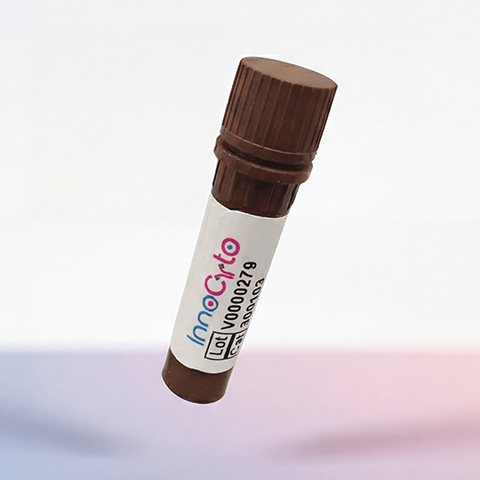
| Cat # | Size | Price | Quantity | |
|---|---|---|---|---|
| 503501 | 1 mg | $250 | ||
| 503502 | 5 mg | $650 | ||
| 503503 | 20 mg | $2000 |
| Clone | Isatuximab |
|---|---|
| Application | Flow cytometry, animal model study |
| Host Species | Mammalian cells |
| Reactivity | Human |
| Format | Liquid |
| Product Description | Isatuximab Biosimilar, CD38 Monoclonal Antibody |
| Isotype | Human IgG1 |
| Regulatory Status | RUO |
| Clonality | Recombinant |
| Immunogen | Human CD38 |
| Species specificity | Human |
| Purity | >95% by reducing SDS-PAGE |
| Grade | In vivo |
| Min Sample Size | 1 mg |
| Storage Conditions | 4ºC |
| Maximal Shelf Life | 12 months |
| Target Name | CD38, gp45, Cyclic ADP-ribose hydrolase 1,T10, ADP-ribosyl cyclase |
| Antibody Type | Recombinant |
| Research Areas | Cancer Marker, T cells, B cells, NK cells, Monocytes, Macrophages, Plasma cells |
| See All Formats | Clone Isatuximab |
Isatuximab is a chimeric monoclonal antibody of the immunoglobulin G1 kappa (IgG1κ) subclass designed to specifically target CD38, a multifunctional transmembrane glycoprotein expressed on various immune and hematopoietic cell types. Structurally, Isatuximab is a glycoprotein with a molecular weight of approximately 150 kilodaltons (kDa). It is composed of two identical heavy chains and two identical light chains joined by interchain disulfide bonds, forming the canonical Y-shaped structure characteristic of IgG antibodies. Each heavy chain contains a variable (VH) domain and three constant domains (CH1-CH3), and each light chain contains a variable (VL) and a constant (CL) domain. The molecule is produced using mammalian expression systems, such as Chinese Hamster Ovary (CHO) cells, which ensure proper folding, assembly, and glycosylation consistent with human immunoglobulins.
The antigen-binding sites of Isatuximab are formed by complementarity-determining regions (CDRs) within the VH and VL domains. These CDRs determine the antibody’s epitope specificity for CD38, binding with high affinity through a network of hydrogen bonds and hydrophobic interactions. The recognized epitope on CD38 lies within its extracellular catalytic domain, which functions as an ectoenzyme involved in the metabolism of nicotinamide adenine dinucleotide (NAD⁺) and cyclic ADP-ribose. By binding to CD38, Isatuximab interferes with its enzymatic activity and can induce receptor clustering that modulates signaling pathways, influencing calcium flux and cell activation in immunological models. Furthermore, engagement of CD38 may promote direct cell death mechanisms through apoptotic or lysosomal pathways under defined experimental conditions.
The Fc (fragment crystallizable) region of Isatuximab, derived from the IgG1 isotype, contributes to molecular stability and prolongs serum half-life via neonatal Fc receptor (FcRn) recycling. It can also engage Fc gamma receptors (FcγRs) and complement component C1q, mediating antibody-dependent cellular cytotoxicity (ADCC) and complement-dependent cytotoxicity (CDC) in vitro.
Anti-Human CD38 (Isatuximab Biosimilar) TDS
Anti-Human CD19 Antibody, Clone HIB19
iF560 Anti-Human CD19 Antibody, Clone HIB19
iF647 Anti-Human CD19 Antibody, Clone 019AM2b
Biotin Anti-Human CD19 Antibody, Clone 019AM2b
Human CD38 Protein (C-His-Avi)
Biotin Human CD38 Protein (C-His-Avi)
Anti-Human CD38 Antibody, Clone HIT2
iF647 Anti-Human CD38 Antibody, Clone HIT2
Anti-Human CD38 (Daratumumab Biosimilar), Clone Daratumumab
Have a product or application question? Consult our FAQs or contact us.