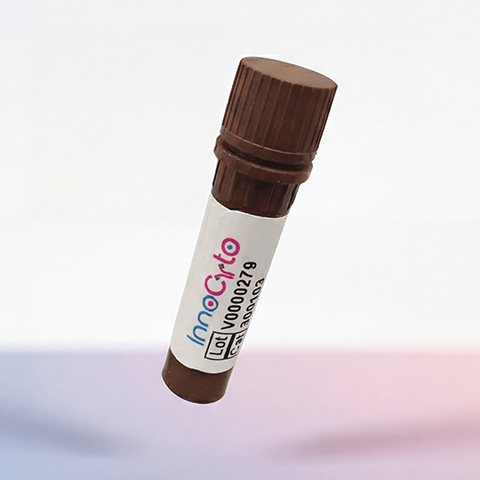
| Cat # | Size | Price | Quantity | |
|---|---|---|---|---|
| 503001 | 1 mg | $250 | ||
| 503002 | 5 mg | $750 | ||
| 503003 | 20 mg | $2000 |
| Clone | Galiximab |
|---|---|
| Application | Flow cytometry, animal model study |
| Host Species | Mammalian cells |
| Reactivity | Human |
| Format | Liquid |
| Product Description | Galiximab Biosimilar, CD80 Monoclonal Antibody |
| Isotype | Human IgG1 |
| Regulatory Status | RUO |
| Clonality | Recombinant |
| Immunogen | Human CD80 |
| Species specificity | Human |
| Purity | >95% by reducing SDS-PAGE |
| Grade | In vivo |
| Storage Conditions | 4ºC |
| Maximal Shelf Life | 12 months |
| Synonyms | B7-1 |
| RRID | AB_3739306 |
| Target Name | CD80, B7-1, B7, BB1 |
| Antibody Type | Recombinant |
| Research Areas | Dendritic cells, Macrophages, B cells, Antigen Presentation, Co-stimulation, Immune Checkpoints |
| See All Formats | Clone Galiximab |
Galiximab is a chimeric monoclonal antibody belonging to the immunoglobulin G1 kappa (IgG1κ) subclass, engineered to specifically recognize and bind to the human CD80 antigen, also known as B7-1. Structurally, the molecule is composed of two identical heavy chains and two identical light chains, joined by interchain disulfide bonds in the classical Y-shaped antibody conformation. The molecular weight of Galiximab is approximately 150 kilodaltons (kDa). The antibody is produced using mammalian expression systems that facilitate proper folding, glycosylation, and assembly consistent with human immunoglobulin frameworks.
The variable domains of the heavy (VH) and light (VL) chains, derived from murine sequences, form the antigen-binding regions of Galiximab. These regions contain complementarity-determining regions (CDRs) that determine binding specificity and affinity for CD80. The constant domains are of human origin, providing the molecule with reduced immunogenicity and improved structural stability. The epitope recognized by Galiximab lies on the extracellular domain of CD80, a costimulatory molecule expressed on the surface of activated B cells and antigen-presenting cells. By binding to CD80, Galiximab sterically interferes with its interaction with CD28 and CTLA-4 on T cells. This blockade modulates key costimulatory signals required for full T-cell activation, cytokine production, and proliferation, making it highly relevant for experimental studies in immune signaling and cellular communication.
The Fc (fragment crystallizable) region of Galiximab, consistent with human IgG1 antibodies, contributes to molecular stability and long serum persistence through interaction with the neonatal Fc receptor (FcRn). It also retains the potential to engage Fc gamma receptors (FcγRs), facilitating secondary immune effector activities such as antibody-dependent cellular cytotoxicity (ADCC) in vitro. Overall, Galiximab represents a rationally designed chimeric IgG1κ antibody that integrates murine-derived epitope specificity with human antibody architecture, serving as a model for studying costimulatory receptor–ligand interactions and B-cell–T-cell signaling regulation in immunological research.
Anti-Human CD80 (Galiximab Biosimilar) TDS
Anti-Human CD28 Antibody, Clone 028AB
iF647 Anti-Human CD28 Antibody, Clone 028AB
iF488 Anti-Human CD28 Antibody, Clone CD28.2
FITC Anti-Human CD28 Antibody, Clone CD28.2
Human B7-1 (CD80) Protein (C-His-Avi)
Biotin Human B7-1 (CD80) Protein (C-His-Avi)
Human B7-1 (CD80) Protein (C-His)
PE Human B7-1 (CD80) Protein (C-His)
APC Human B7-1 (CD80) Protein (C-His)
Human B7-1 (CD80) Protein (C-Fc-Avi)
Have a product or application question? Consult our FAQs or contact us.