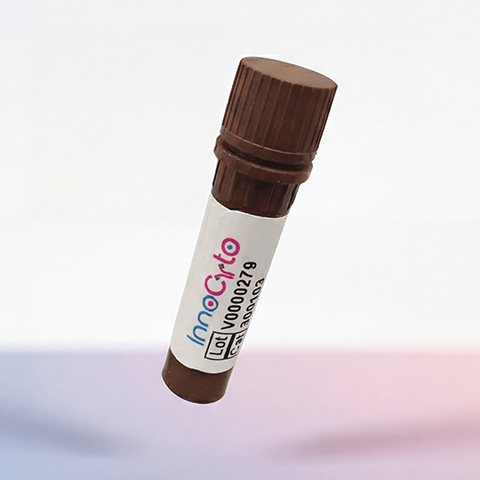
| Cat # | Size | Price | Quantity | |
|---|---|---|---|---|
| 501001 | 1 mg | $250 | ||
| 501002 | 5 mg | $750 | ||
| 501003 | 20 mg | $2000 |
| Clone | Briakinumab |
|---|---|
| Application | Neutralization, Intracellular Flow cytometry, animal model study |
| Host Species | Mammalian cells |
| Reactivity | Human |
| Format | Liquid |
| Product Description | Anti-Human IL-12 / IL-23 (Briakinumab Biosimilar) |
| Isotype | Human IgG1 |
| Regulatory Status | RUO |
| Clonality | Recombinant |
| Immunogen | Human IL-12 / IL-23 |
| Species specificity | Human |
| Purity | >95% by reducing SDS-PAGE |
| Grade | In vivo |
| Min Sample Size | 1 mg |
| Storage Conditions | 4ºC |
| Maximal Shelf Life | 12 months |
| Synonyms | p40 |
| Target Name | IL-12/IL-23 |
| Research Areas | Cytokines, Inflammation |
| See All Formats | Clone Briakinumab |
Briakinumab is a recombinant, fully human monoclonal antibody that belongs to the immunoglobulin G1 (IgG1) subclass. It is designed to specifically bind to the shared p40 subunit of the cytokines interleukin-12 (IL-12) and interleukin-23 (IL-23), thereby interfering with their interaction with the interleukin-12 receptor β1 (IL-12Rβ1) on the surface of immune cells. Structurally, Briakinumab is a typical IgG1 molecule composed of two identical heavy chains and two identical light chains connected by disulfide bonds, forming a Y-shaped configuration. It has an approximate molecular weight of 148 kilodaltons (kDa) and is produced using mammalian expression systems, such as Chinese Hamster Ovary (CHO) cells, to ensure proper glycosylation and protein folding consistent with human antibodies.
The variable regions of the heavy and light chains in Briakinumab contain complementarity-determining regions (CDRs), which define its antigen-binding specificity. These regions form a paratope that engages with the p40 subunit of IL-12 and IL-23 through non-covalent interactions, including hydrogen bonding and van der Waals forces. By binding to the p40 subunit, Briakinumab prevents IL-12 and IL-23 from interacting with their receptor complexes on T cells and natural killer (NK) cells. This inhibition disrupts downstream signaling through the Janus kinase-signal transducer and activator of transcription (JAK-STAT) pathway, limiting the production of proinflammatory cytokines such as interferon-gamma (IFN-γ) and interleukin-17 (IL-17) in experimental systems.
The Fc region of Briakinumab provides structural stability, prolongs its serum half-life by interacting with neonatal Fc receptors (FcRn), and maintains effector functions characteristic of IgG1 antibodies. It is glycosylated at the asparagine 297 residue within the CH2 domain, contributing to molecular solubility and conformation.
Anti-Human IL-12 / IL-23 (Briakinumab Biosimilar) TDS
Anti-Human IL-12 / IL-23 (Ustekinumab Biosimilar), Clone Ustekinumab
Have a product or application question? Consult our FAQs or contact us.