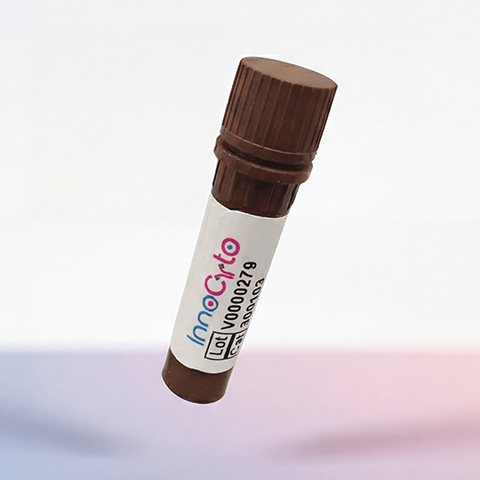
| Cat # | Size | Price | Quantity | |
|---|---|---|---|---|
| 502101 | 1 mg | $190 | ||
| 502102 | 5 mg | $750 | ||
| 502103 | 20 mg | $1800 |
| Clone | Dupilumab |
|---|---|
| Application | Flow cytometry, animal model study |
| Host Species | Mammalian cells |
| Reactivity | Human |
| Format | Liquid |
| Product Description | Dupilumab Biosimilar, Human IL4R alpha Monoclonal Antibody |
| Isotype | Human IgG4 |
| Regulatory Status | RUO |
| Clonality | Recombinant |
| Immunogen | Human IL4R alpha |
| Species specificity | Human |
| Purity | >95% by reducing SDS-PAGE |
| Grade | In vivo |
| Storage Conditions | 4ºC |
| Maximal Shelf Life | 12 months |
| Synonyms | IL-4 receptor alpha |
| Target Name | CD124, IL-4Ra |
| Antibody Type | Recombinant |
| Research Areas | B cells, Th2 cells, Early Thymocytes, Double Positive Cells |
| See All Formats | Clone Dupilumab |
Dupilumab is a fully human monoclonal antibody belonging to the immunoglobulin G4 (IgG4) subclass, designed to target the alpha subunit of the interleukin-4 receptor (IL-4Rα). Structurally, it is a glycoprotein composed of two identical heavy chains and two identical light chains connected by interchain disulfide bonds, forming the typical Y-shaped structure characteristic of IgG antibodies, with a molecular weight of approximately 147 kilodaltons (kDa). It is produced in mammalian expression systems, such as Chinese Hamster Ovary (CHO) cells, which allow proper folding, assembly, and glycosylation consistent with human antibody properties.
The variable regions of Dupilumab’s heavy (VH) and light (VL) chains contain complementarity-determining regions (CDRs) responsible for binding specifically to human IL-4Rα. This receptor subunit is shared by both the interleukin-4 (IL-4) and interleukin-13 (IL-13) signaling pathways. Through high-affinity, non-covalent interactions involving hydrogen bonding and hydrophobic contacts, Dupilumab binds to IL-4Rα in a manner that sterically blocks the receptor’s interaction with both interleukin ligands. This inhibits signaling through the type I receptor complex (IL-4Rα/γc) and the type II receptor complex (IL-4Rα/IL-13Rα1), which are responsible for activating intracellular Janus kinase (JAK) and signal transducer and activator of transcription (STAT) pathways, particularly STAT6. The interruption of these cascades alters gene expression patterns associated with cytokine-mediated immune regulation in experimental systems.
The Fc region of Dupilumab, consistent with IgG4 isotype antibodies, has been engineered with an S228P substitution in the hinge region to enhance structural stability and prevent half-molecule exchange. This IgG4 backbone minimizes effector functions such as antibody-dependent cellular cytotoxicity (ADCC) and complement activation while maintaining extended serum half-life through interaction with the neonatal Fc receptor (FcRn).
Anti-Human IL-4Rα (CD124) (Dupilumab Biosimilar) TDS
Anti-Human IL-4 Antibody, Clone MP4-25D2
iF647 Anti-Human IL-4 Antibody, Clone MP4-25D2
Have a product or application question? Consult our FAQs or contact us.