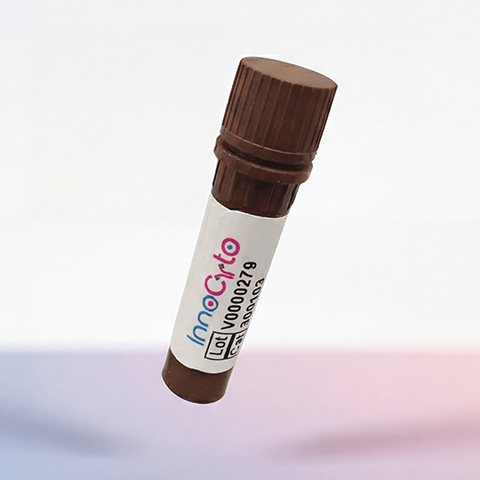
| Cat # | Size | Price | Quantity | |
|---|---|---|---|---|
| 506001 | 1 mg | $190 | ||
| 506002 | 5 mg | $590 | ||
| 506003 | 20 mg | $1800 |
| Clone | Tocilizumab |
|---|---|
| Application | Flow cytometry, animal model study |
| Host Species | Mammalian cells |
| Reactivity | Human |
| Format | Liquid |
| Product Description | Tocilizumab Biosimilar, Human IL-6R Monoclonal Antibody |
| Isotype | Human IgG1 |
| Regulatory Status | RUO |
| Clonality | Recombinant |
| Immunogen | Human IL-6R |
| Species specificity | Human |
| Purity | >95% by reducing SDS-PAGE |
| Grade | In vivo |
| Storage Conditions | 4ºC |
| Maximal Shelf Life | 12 months |
| Synonyms | CD126, gp80 |
| Target Name | IL-6R, IL-6R1, gp80, IL-6 receptor alpha |
| Antibody Type | Recombinant |
| Research Areas | B cells, T cells, Autoimmunity, Cancer Marker |
| See All Formats | Clone Tocilizumab |
Tocilizumab is a humanized monoclonal antibody belonging to the immunoglobulin G1 kappa (IgG1κ) subclass, engineered to specifically bind to the interleukin-6 receptor (IL-6R), both its soluble (sIL-6R) and membrane-bound (mIL-6R) forms. Structurally, Tocilizumab is a glycoprotein with a molecular mass of approximately 148 kilodaltons (kDa). It comprises two identical heavy chains and two identical light chains connected by interchain disulfide bonds, forming the classical Y-shaped IgG quaternary structure. Each heavy chain contains one variable (VH) and three constant (CH1-CH3) domains, while each light chain is composed of one variable (VL) and one constant (CL) domain. The antibody is expressed in mammalian cell systems such as Chinese Hamster Ovary (CHO) cells, which enable correct folding, glycosylation, and assembly.
The variable regions of Tocilizumab, particularly the complementarity-determining regions (CDRs), are derived from murine antibody sequences and engineered into a human IgG1 framework. These CDRs form the antigen-binding sites that confer high affinity and selectivity toward IL-6R. Tocilizumab binds to an epitope on the extracellular domain of IL-6R, preventing interleukin-6 (IL-6) from interacting with its receptor complex. This steric blockade inhibits the formation of the IL-6/IL-6R/gp130 signaling complex, which is responsible for activating intracellular pathways such as JAK/STAT, MAPK, and PI3K/AKT. Consequently, the antibody modulates cytokine-mediated transcriptional regulation, cell survival, and immune signaling in model systems.
The Fc (fragment crystallizable) region of Tocilizumab, derived from the human IgG1 isotype, contributes to structural stability and prolonged circulation via neonatal Fc receptor (FcRn)-mediated recycling. The Fc region also allows limited engagement with Fc gamma receptors (FcγRs), though the primary mechanism of action is ligand-receptor blockade rather than effector-mediated cytotoxic activity.
Anti-Human IL-6R (Tocilizumab Biosimilar) TDS
Have a product or application question? Consult our FAQs or contact us.