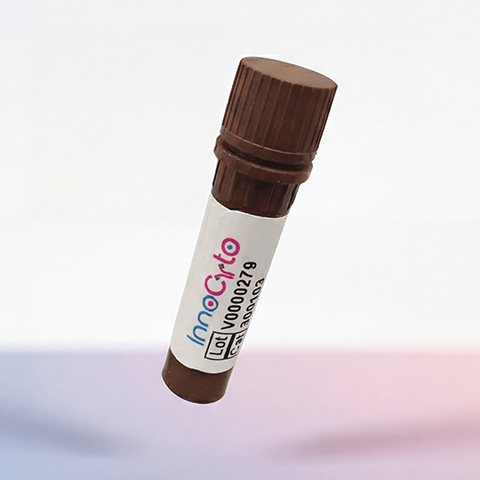
| Cat # | Size | Price | Quantity | |
|---|---|---|---|---|
| 504001 | 1 mg | $175 | ||
| 504002 | 5 mg | $480 | ||
| 504003 | 20 mg | $1390 |
| Clone | Natalizumab |
|---|---|
| Application | Flow cytometry, animal model study |
| Host Species | Mammalian cells |
| Reactivity | Human |
| Format | Liquid |
| Product Description | Natalizumab Biosimilar, Integrin alpha 4 Monoclonal Antibody |
| Isotype | Human IgG4 |
| Regulatory Status | RUO |
| Clonality | Recombinant |
| Immunogen | Human Integrin alpha 4 |
| Species specificity | Human |
| Purity | >95% by reducing SDS-PAGE |
| Grade | In vivo |
| Storage Conditions | 4ºC |
| Maximal Shelf Life | 12 months |
| Synonyms | Alpha 4 integrin, a4 integrin |
| RRID | AB_3739316 |
| Target Name | VLA-4 α chain, α4 integrin, integrin α4, ITGA4 |
| Antibody Type | Recombinant |
| Research Areas | Adhesion Molecules, T cells, B cells, NK cells, Hematopoietic Stem Cells, Autoimmunity, Cancer Marker |
| See All Formats | Clone Natalizumab |
Natalizumab is a recombinant humanized monoclonal antibody belonging to the immunoglobulin G4 (IgG4) subclass, designed to target the α4 subunit of integrins expressed on the surface of leukocytes. Structurally, the molecule has a molecular weight of approximately 149 kilodaltons (kDa) and is composed of two identical heavy chains and two identical light chains joined by interchain disulfide bonds, forming the classical Y-shaped IgG conformation. The heavy chains each contain one variable (VH) domain and three constant (CH1-CH3) domains, while the light chains consist of one variable (VL) and one constant (CL) domain. Natalizumab is produced in mammalian expression systems such as Chinese Hamster Ovary (CHO) cells to ensure proper protein folding, assembly, and glycosylation.
The antigen-binding sites of Natalizumab reside in the complementarity-determining regions (CDRs) within its VH and VL domains, which confer high specificity toward the α4 integrin subunit (also known as CD49d). This subunit forms heterodimers with β1 or β7 integrin partners to generate α4β1 (very late antigen-4, VLA-4) and α4β7 integral membrane receptors. By binding to α4 integrins, Natalizumab sterically inhibits their interaction with endothelial ligands, such as vascular cell adhesion molecule-1 (VCAM-1) and mucosal addressin cell adhesion molecule-1 (MAdCAM-1). In experimental systems, this blockade interferes with leukocyte adhesion, migration, and trafficking through endothelial barriers, thereby modulating immune cell localization and activity within tissues.
The Fc region of Natalizumab is derived from the human IgG4 isotype, which is characterized by a naturally reduced capacity to engage effector mechanisms such as antibody-dependent cellular cytotoxicity (ADCC) and complement-dependent cytotoxicity (CDC). This subclass also incorporates a stabilizing S228P substitution to prevent half-antibody exchange, enhancing molecular integrity. Overall, Natalizumab exemplifies a rationally engineered IgG4 monoclonal antibody combining high-affinity integrin blockade with structural stability to precisely modulate cell adhesion and immune signaling mechanisms in molecular and cellular research contexts.
Anti-Human integrin α4β1 (VLA-4) TDS
Have a product or application question? Consult our FAQs or contact us.