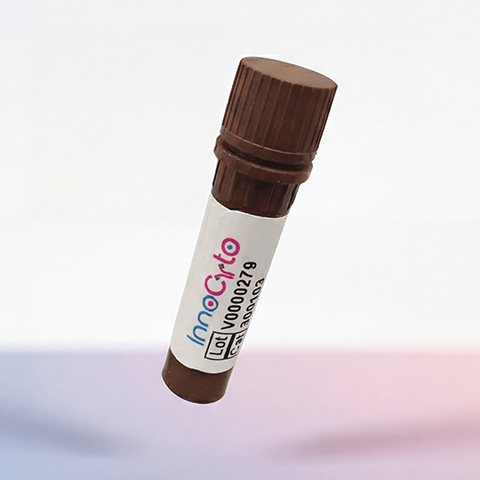
| Cat # | Size | Price | Quantity | |
|---|---|---|---|---|
| 505901 | 1 mg | $190 | ||
| 505902 | 5 mg | $480 | ||
| 505903 | 20 mg | $1200 |
| Clone | Tanezumab |
|---|---|
| Application | Neutralization, Intracellular Flow cytometry, animal model study |
| Host Species | Mammalian cells |
| Reactivity | Human |
| Format | Liquid |
| Product Description | Tanezumab Biosimilar, Human NGF Monoclonal Antibody |
| Isotype | Human IgG2 |
| Regulatory Status | RUO |
| Clonality | Recombinant |
| Immunogen | Human NGF |
| Species specificity | Human |
| Purity | >95% by reducing SDS-PAGE |
| Grade | In vivo |
| Min Sample Size | 1 mg |
| Storage Conditions | 4ºC |
| Maximal Shelf Life | 12 months |
| Target Name | NGF |
| Research Areas | Neurons, Cancer Marker |
| See All Formats | Clone Tanezumab |
Tanezumab is a humanized monoclonal antibody of the immunoglobulin G2 (IgG2) subclass that selectively binds to and neutralizes nerve growth factor (NGF), a key neurotrophin involved in neuronal growth, survival, and pain signal modulation. Structurally, Tanezumab is a recombinant glycoprotein with a molecular weight of approximately 150 kilodaltons (kDa). The molecule is composed of two identical heavy chains and two identical light chains connected by interchain disulfide bonds, forming the characteristic Y-shaped antibody configuration. It is produced in mammalian cell expression systems, such as Chinese Hamster Ovary (CHO) cells, which ensure accurate folding, glycosylation, and overall structural stability consistent with human antibodies.
The antigen-binding fragments (Fab) of Tanezumab contain variable domains (VH and VL) whose complementarity-determining regions (CDRs) define high-affinity and specificity for NGF. These CDRs engage discrete epitopes on NGF through hydrogen bonding, van der Waals interactions, and hydrophobic contacts, yielding nanomolar-range binding affinities. By binding directly to NGF, Tanezumab prevents NGF from interacting with its cognate receptors: tropomyosin receptor kinase A (TrkA) and the low-affinity p75 neurotrophin receptor (p75NTR). This blockade disrupts the receptor-mediated signaling cascades that regulate the activation of downstream pathways, such as the mitogen-activated protein kinase (MAPK) and phosphatidylinositol 3-kinase (PI3K)-AKT pathways, which influence nociceptor sensitization and neuronal growth responses in experimental systems.
The Fc (fragment crystallizable) region of Tanezumab, characteristic of the IgG2 subclass, contributes to its structural integrity and extended half-life through binding to the neonatal Fc receptor (FcRn), which protects the molecule from lysosomal degradation. Unlike IgG1 antibodies, IgG2 has limited effector function, reducing complement activation and receptor-mediated immune responses. Overall, Tanezumab exemplifies advanced antibody engineering designed for targeted ligand sequestration—combining high molecular precision, biophysical stability, and selective interference with neurotrophin signaling for mechanistic studies of neuronal pathway regulation.
Anti-Human NGF (Tanezumab Biosimilar) TDS
Have a product or application question? Consult our FAQs or contact us.