| Cat # | Size | Price | Quantity | |
|---|---|---|---|---|
| 202001 | 100 ug | $95 | ||
| 202002 | 500 ug | $200 |
| Clone | TC15-12F12.2 |
|---|---|
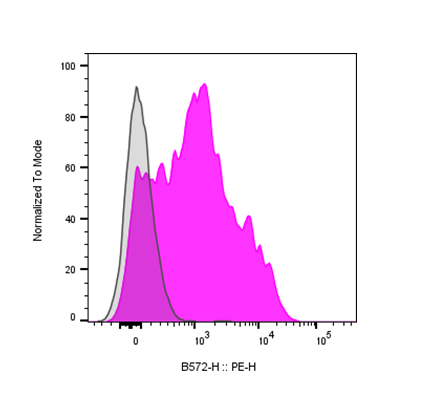
| Application | Flow Cytometry |
| Reactivity | Mouse |
| Format | Purified |
| Target Name | CD150, SLAM, IPO-3 |
| Isotype | Rat IgG2a |
| Antibody Type | Monoclonal |
| Regulatory Status | RUO |
| Formulation | Phosphate-buffered solution, pH 7.2, containing 0.09% sodium azide |
| Protein Concentration | 0.5 mg/mL |
| Storage&Handling | The antibody solution should be stored between 2°C and 8°C |
| Recommended Usage | For flow cytometric staining, it is recommended to use less than 0.2 µg of this reagent per 0.5-1.0 million cells in a 100 µL volume. Optimal reagent performance should be determined by titration for each specific application. |
| RRID | AB_3739074 |
| Research Areas | Activated T cells, Co-stimulation, T cell Activation |
| See All Formats | Clone TC15-12F12.2 |
CD150, also known as SLAMF1 (Signaling Lymphocytic Activation Molecule Family member 1), is an immunoregulatory cell surface receptor involved in lymphocyte activation, differentiation, and immune coordination. It is expressed primarily on immune cells, including activated T cells, B cells, dendritic cells, macrophages, and certain innate lymphoid cell subsets. CD150 is a founding member of the SLAM family, a group of receptors that fine-tune immune responses through cell-cell interactions.
Structurally, CD150 is a type I transmembrane glycoprotein belonging to the immunoglobulin superfamily. Its extracellular region consists of two Ig-like domains: a membrane-distal variable (V)-like domain and a membrane-proximal constant (C2)-like domain. These domains mediate receptor engagement, which occurs primarily through homophilic binding, meaning CD150 on one cell binds to CD150 on another. The cytoplasmic tail contains conserved immunoreceptor tyrosine-based switch motifs (ITSMs), which are essential for downstream signaling.
Functionally, CD150 acts as a costimulatory and regulatory receptor. Upon engagement, the ITSMs recruit adaptor proteins such as SLAM-associated protein (SAP) or EAT-2, which determine the qualitative outcome of signaling. Through these interactions, CD150 influences pathways controlling cytokine production, cell proliferation, cytotoxicity, and immune synapse formation. In T and B cells, CD150 signaling modulates activation and antibody responses, while in macrophages and dendritic cells it contributes to microbial sensing and inflammatory cytokine production.
CD150 plays important roles in disease. Disruption of signaling downstream of CD150, particularly due to mutations in SAP, leads to X-linked lymphoproliferative disease (XLP), a severe immunodeficiency characterized by uncontrolled immune activation, especially following Epstein-Barr virus infection. CD150 is also a well-established cellular receptor for measles virus, enabling viral entry into immune cells and contributing to the profound immunosuppression observed during measles. Altered CD150 expression or signaling has additionally been linked to autoimmune disease, chronic inflammation, and certain hematologic malignancies.
Therapeutically, CD150 is relevant as both a biomarker and a potential immunomodulatory target. It is used to identify activated immune cell populations and to study immune dysregulation. Modulating CD150 signaling is being explored as a strategy to enhance immune responses in cancer and chronic infection or to suppress pathological activation in autoimmune conditions. Furthermore, understanding CD150-mediated viral entry has informed vaccine and antiviral research, underscoring its translational significance.
Rat IgG2a Isotype Control Antibody
Anti-Mouse CD150 (SLAM) Antibody TDS
Rat IgG2a Isotype Control Antibody, Clone RTK2758
Have a product or application question? Consult our FAQs or contact us.