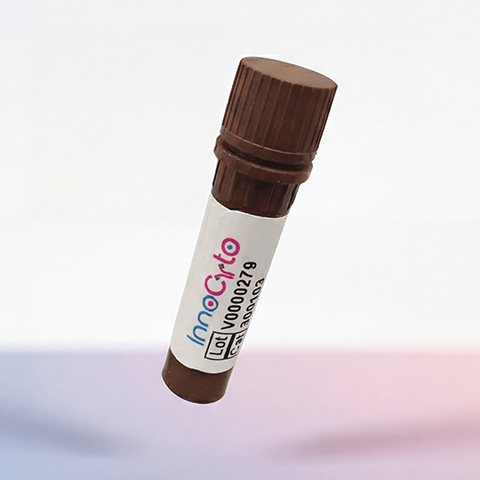
| Cat # | Size | Price | Quantity | |
|---|---|---|---|---|
| 604203 | 25 tests | $70 | ||
| 604204 | 100 tests | $170 |
| Application | Flow Cytometry |
|---|---|
| Format | Biotin |
| Expression Host | E.coli |
| Target Name | Annexin A5 |
| Species | Human |
| accession number | P08758 |
| Sources | Recombinant Human Annexin A5 (Met1-Asp320) with N-His-Xa tag is expressed in E.coli system. His tag is cut by Xa after purification. This protein is biotinylated in vitro. |
| Molecular Weight | This protein has a predicted molecular weight of 35.9 kDa. Under DTT-reducing conditions, the protein migrates at approximately 35 kDa on SDS-PAGE. |
| Affinity Tag | None |
| Purity | >95% based on SDS-PAGE under reducing condition |
| Regulatory Status | RUO |
| Formulation | 1xPBS buffer, pH7.4, 0.09% NaN3 with a carrier protein |
| Protein Concentration | Supplied at a lot-specific concentration. |
| Storage and Handling | The protein solution should be stored undiluted between 2°C and 8°C. Do not freeze. |
| Recommended Usage | For flow cytometric staining, it is recommended to use 5 µL of this reagent per 0.5-1.0 million cells in a 100 µL volume. Optimal reagent performance should be determined by titration for each specific application. |
| Research Areas | Apoptosis, Cell Death |
Annexin A5 is a member of the annexin family, a group of proteins that bind negatively charged phospholipids in a calcium-dependent manner. During apoptosis, phosphatidylserine (PS) translocates to the outer leaflet of the plasma membrane. Annexin A5 specifically binds to this exposed PS, making it a widely used marker for early apoptosis. It is commonly used in combination with propidium iodide (PI) in flow cytometry or microscopy assays
Have a product or application question? Consult our FAQs or contact us.