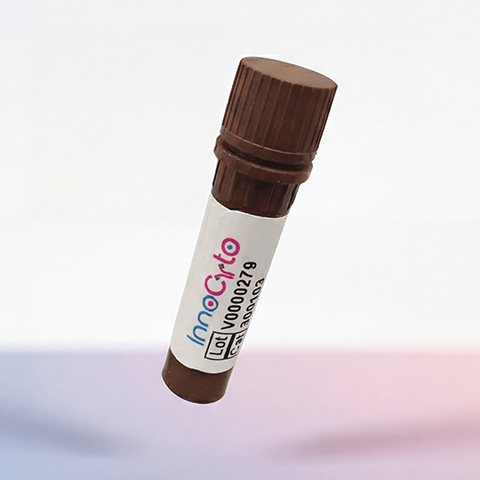
| Cat # | Size | Price | Quantity | |
|---|---|---|---|---|
| 301617 | 25 ug | $30 | ||
| 301618 | 100 ug | $60 |
| Clone | MOPC-21-2b |
|---|---|
| Application | Flow Cytometry |
| Reactivity | N/A |
| Format | FITC |
| Target Name | Mouse IgG2b Isotype Control |
| Isotype | Mouse IgG2b |
| Antibody Type | Monoclonal |
| Regulatory Status | RUO |
| Formulation | Phosphate-buffered solution, pH 7.2, containing 0.09% sodium azide and 0.2% (w/v) BSA |
| Protein Concentration | 0.2mg/mL |
| Storage and Handling | The antibody solution should be stored undiluted between 2°C and 8°C, and protected from prolonged exposure to light. Do not freeze. |
| Recommended Usage | Use at concentrations comparable to those used for the target-specific antibody. FITC has an excitation max at 493 nm and an emission max at 525 nm. |
| Excitation Laser | Blue Laser (488 nm) |
| See All Formats | Clone MOPC-21-2b |
This antibody is a clone of the MOPC-21 variable region with a mouse IgG2b, κ isotype. The MOPC-21 immunoglobulin has unknown antigen specificity and is commonly used as an isotype control. It was selected based on screening across various resting and activated cells, as well as live and fixed tissues from mouse, rat, and human sources.
FITC Mouse IgG2b Isotype Control Antibody TDS
Have a product or application question? Consult our FAQs or contact us.