| Cat # | Size | Price | Quantity | |
|---|---|---|---|---|
| 603901 | 25 ug | $79 | ||
| 603902 | 100 ug | $199 | ||
| 603903 | 500 ug | $599 | ||
| 603904 | 1 mg | $749 |
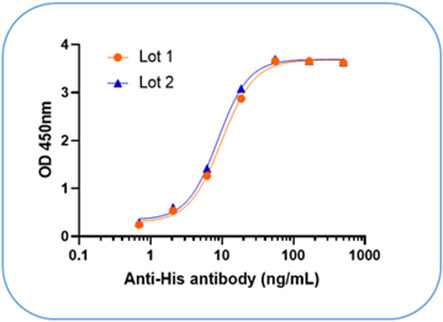
| Application | ELISA, BLI |
|---|---|
| Format | Liquid, Purified |
| Expression Host | E.coli |
| Target Name | GST with multiple tags protein (Myc-Avi-V5-DYKDDDDK-HA-His) |
| Species | Schistosoma japonicum |
| Sources | Recombinant GST protein with multiple tags (Myc-Avi-V5-FLAG-HA-His) at C-terminus is expressed in E.coli system. |
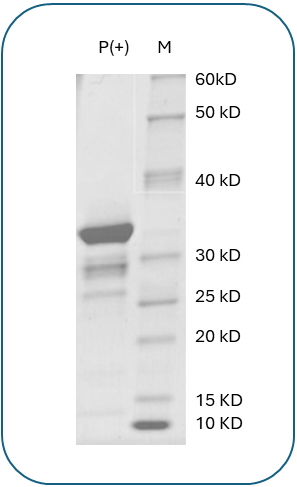
| Molecular Weight | This protein has a predicted molecular weight of 35.9 kDa. Under DTT-reducing conditions, the protein migrates at approximately 35 kDa on SDS-PAGE. The smaller band below 30 kDa might correspond to the early translational termination product. |
| Affinity Tag | C-Myc-Avi-V5-DYKDDDDK-HA-His |
| Purity | >90% based on SDS-PAGE under reducing condition |
| Regulatory Status | RUO |
| Formulation | 1xPBS buffer, pH7.4, 0.22 µm filtered |
| Endotoxin level | Not tested |
| Protein Concentration | 25µg size is bottled at 0.2mg/mL concentration. 100 µg size is supplied at a lot-specific concentration. |
| Storage and Handling | Briefly centrifuge the vial upon receipt. An unopened vial can be stored at 4°C for up to 2 weeks, or at -20°C or below for up to six months. The protein may be further diluted to 0.1 mg/mL using 0.22 µm-filtered PBS buffer (pH 7.4). For long-term storage, the diluted stock solution should be aliquoted and stored at ≤ –70°C to minimize freeze-thaw cycles. If additional dilution is required, carrier proteins such as FBS or BSA should be added to maintain protein stability. |
GST Protein with multiple tags TDS
Have a product or application question? Consult our FAQs or contact us.