| Cat # | Size | Price | Quantity | |
|---|---|---|---|---|
| 601501 | 25 ug | $145 | ||
| 601502 | 100 ug | $295 |
| Application | ELISA, BLI |
|---|---|
| Format | Liquid, Purified |
| Expression Host | HEK293 |
| Target Name | GM2A, Ganglioside GM2 activator |
| Species | Human |
| Accession Number | P17900 |
| Sources | Recombinant human GM2A mature fragment (Ser32-Ile193) with N-terminus His tag was expressed in 293 Cells |
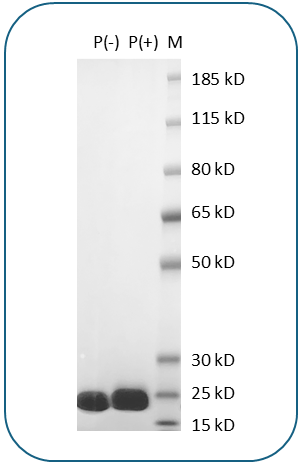
| Molecular Weight | This protein has a predicted molecular weight of 19.7 kDa. Under DTT-reducing conditions, the protein migrates at approximately 22 kDa on SDS-PAGE. |
| Affinity Tag | N-His |
| Purity | >95% based on SDS-PAGE under reducing condition |
| Regulatory Status | RUO |
| Formulation | 1xPBS with 300mM NaCl, pH7.4, 0.22 µm filtered |
| Endotoxin level | Not tested |
| Protein Concentration | 25µg size is bottled at 0.2mg/mL concentration. 100 µg size is supplied at a lot-specific concentration. |
| Storage and Handling | Briefly centrifuge the vial upon receipt. An unopened vial can be stored at 4°C for up to 2 weeks, or at -20°C or below for up to six months. The protein may be further diluted to 0.1 mg/mL using 0.22 µm-filtered PBS buffer (pH 7.4). For long-term storage, the diluted stock solution should be aliquoted and stored at ≤ –70°C to minimize freeze-thaw cycles. If additional dilution is required, carrier proteins such as FBS or BSA should be added to maintain protein stability. |
| Research Areas | Metabolism |
GM2 ganglioside activator (GM2A) is a lipid transfer protein of the ML domain family that facilitates the degradation of ganglioside GM2 by acting as a substrate-specific cofactor for β-hexosaminidase A. GM2A extracts GM2 from membranes and presents it in soluble form to β-hexosaminidase A for cleavage, enabling conversion to GM3. It can bind several single-chain phospholipids and fatty acids and shows some calcium-independent phospholipase activity. Mutations in GM2A cause GM2-gangliosidosis type AB, a Tay-Sachs disease variant characterized by impaired GM2 degradation and lipid accumulation.
Human GM2A Protein (N-His) TDS
Have a product or application question? Consult our FAQs or contact us.