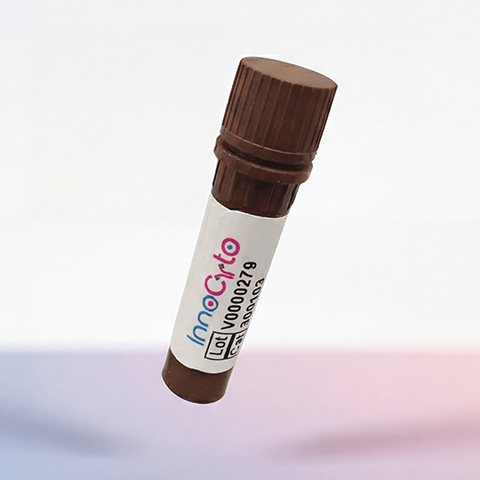
| Cat # | Size | Price | Quantity | |
|---|---|---|---|---|
| 516901 | 1 mg | $160 | ||
| 516902 | 5 mg | $400 | ||
| 516903 | 25 mg | $1100 |
| Clone | N901 |
|---|---|
| Application | Direct ELISA, functional assay, Flow Cytometry |
| Host Species | CHO cells |
| Reactivity | Human |
| Format | Liquid |
| Target Name | CD56, Leu-19, NKH1 |
| Product Description | In vivo Grade Recombinant Anti-human CD56 Monoclonal Antibody |
| Isotype | Mouse IgG1 Kappa |
| Antibody Type | Recombinant |
| Regulatory Status | RUO |
| Purity | >95% by reducing SDS-PAGE |
| Endotoxin | < 1 EU per 1 mg of the protein by the LAL method. |
| Storage Conditions | 4ºC |
| Grade | In vivo |
| Recommended Usage | This product is suitable in in vitro functional assays or in vivo on human cells used in animal models. Optimal amounts need to be determined empirically for each experiment. |
| Research Areas | NK cells, NKT cells, Adhesion Molecules, Neurons, Cancer Marker |
| See All Formats | Clone N901 |
CD56, also known as neural cell adhesion molecule (NCAM), is a multifunctional cell surface glycoprotein belonging to the immunoglobulin (Ig) superfamily. While originally characterized in the nervous system, CD56 is best known in immunology as a defining marker of natural killer (NK) cells and a subset of T lymphocytes. Its expression level on NK cells is used to distinguish functionally distinct subsets, most notably CD56bright and CD56dim NK cells.
Structurally, CD56 is a type I transmembrane protein composed of five extracellular Ig-like domains and two fibronectin type III domains, followed by a single transmembrane region and a cytoplasmic tail. Alternative splicing generates several isoforms (primarily NCAM-120, NCAM-140, and NCAM-180), which differ in their cytoplasmic domains and signaling capabilities. CD56 can also be post-translationally modified by polysialylation, a feature that modulates its adhesive properties and is particularly important in neural development.
Functionally, CD56 mediates homophilic interactions (CD56-CD56 binding) as well as heterophilic interactions with other ligands, including heparan sulfate proteoglycans, fibroblast growth factor receptor (FGFR), and components of the extracellular matrix. In the immune system, CD56 plays a role in cell-cell adhesion, immune synapse formation, and signal transduction. CD56bright NK cells are typically less cytotoxic but produce high levels of cytokines such as IFN-γ, contributing to immune regulation, whereas CD56dim NK cells exhibit potent cytotoxic activity against virally infected and transformed cells.
CD56 is implicated in several diseases. Aberrant or ectopic expression of CD56 is observed in various malignancies, including multiple myeloma, small cell lung carcinoma, neuroendocrine tumors, and certain leukemias and lymphomas. In hematologic diagnostics, CD56 expression is routinely used as an immunophenotypic marker to aid in disease classification and prognosis. For example, CD56 expression in multiple myeloma has been associated with altered patterns of bone marrow adhesion and disease behavior.
Therapeutically, CD56 has emerged as a potential target in oncology. Antibody-based approaches and antibody–drug conjugates directed against CD56 have been explored to selectively eliminate CD56-expressing tumor cells, particularly in neuroendocrine cancers and hematologic malignancies. In addition, CD56 is widely used as a marker for NK cell isolation, monitoring, and quality control in NK cell–based immunotherapies, underscoring its importance in both basic research and clinical applications.
In Vivo Star Anti-Human CD56 (NCAM) Antibody TDS
Anti-Human CD16 (FcγRIII) Antibody, Clone 016AB
iF488 Anti-Human CD16 (FcγRIII) Antibody, Clone 016AB
iF647 Anti-Human CD16 (FcγRIII) Antibody, Clone 3G8
PE Anti-Human CD16 (FcγRIII) Antibody, Clone 3G8
Anti-Human CD56 (NCAM) Antibody, Clone 056EM1
iF647 Anti-Human CD56 (NCAM) Antibody, Clone 056EM1
iF488 Anti-Human CD56 Antibody, Clone CD56H
Have a product or application question? Consult our FAQs or contact us.