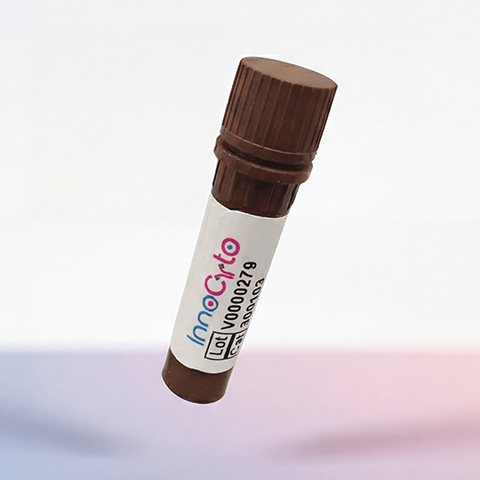
| Cat # | Size | Price | Quantity | |
|---|---|---|---|---|
| 517801 | 1 mg | $160 | ||
| 517802 | 5 mg | $400 | ||
| 517803 | 25 mg | $1100 |
| Clone | H22-hg1SL |
|---|---|
| Application | Direct ELISA, functional assay, Flow Cytometry |
| Host Species | CHO cells |
| Reactivity | Human |
| Format | Liquid |
| Target Name | CD64, FCGR1A, FCG1, FCGR1, IGFR1 |
| Product Description | In vivo Grade Recombinant Anti-human CD64 Monoclonal Antibody |
| Isotype | Human IgG1 Fc Silent Kappa |
| Antibody Type | Recombinant |
| Regulatory Status | RUO |
| Purity | >95% by reducing SDS-PAGE |
| Endotoxin | < 1 EU per 1 mg of the protein by the LAL method. |
| Storage Conditions | 4ºC |
| Grade | In vivo |
| Recommended Usage | This product is suitable in in vitro functional assays or in vivo on human cells used in animal models. Optimal amounts need to be determined empirically for each experiment. |
| Research Areas | Monocytes, Macrophages, Dendritic cells, Inflammation, Infectious Diseases, Autoimmunity |
| See All Formats | Clone H22-hg1SL |
CD64, also known as Fc gamma receptor I (FcγRI), is a high-affinity receptor for immunoglobulin G (IgG) and plays a central role in antibody-mediated immune responses. It is primarily expressed on myeloid lineage cells, including monocytes, macrophages, dendritic cells, and activated neutrophils. Through its ability to bind IgG-opsonized targets, CD64 enables these cells to detect, internalize, and eliminate pathogens and immune complexes, making it a key link between the adaptive humoral immune response and innate effector functions.
Structurally, CD64 is a type I transmembrane glycoprotein belonging to the immunoglobulin superfamily. Its extracellular region consists of three Ig-like domains, which confer its uniquely high affinity for the Fc portion of IgG, allowing it to bind monomeric IgG in addition to immune complexes. CD64 has a short cytoplasmic tail that lacks intrinsic signaling motifs and therefore associates non-covalently with the Fc receptor common γ-chain (FcRγ). This accessory chain contains immunoreceptor tyrosine-based activation motifs (ITAMs) that are essential for signal transduction following receptor engagement.
The principal ligands for CD64 are IgG antibodies, with particularly strong binding to human IgG1 and IgG3 subclasses. When CD64 binds IgG-coated microbes, tumor cells, or immune complexes, it triggers intracellular signaling through FcRγ, leading to phagocytosis, antibody-dependent cellular cytotoxicity (ADCC), production of reactive oxygen species, and secretion of pro-inflammatory cytokines. Through these mechanisms, CD64 contributes to host defense against infection and to the clearance of antibody-tagged targets.
CD64 expression and function are implicated in several disease contexts. In infectious and inflammatory diseases, CD64 is strongly upregulated on neutrophils and monocytes in response to cytokines such as interferon-γ. Neutrophil CD64 expression has become a widely used biomarker for systemic bacterial infection and sepsis, reflecting heightened innate immune activation. In autoimmune diseases, excessive engagement of CD64 by immune complexes can contribute to chronic inflammation and tissue damage. CD64 is also expressed on tumor-associated macrophages, where it may influence antibody-based antitumor immunity.
Therapeutically, CD64 has attracted interest as both a biomarker and a potential target. Its restricted expression pattern on myeloid cells makes it an appealing target for antibody-drug conjugates or immunotoxins aimed at selectively depleting pathogenic macrophages in cancer or inflammatory disease. In addition, the effectiveness of many therapeutic antibodies relies in part on Fcγ receptor engagement, and CD64 expression levels can influence clinical responses. As a result, CD64 remains an important focus in immunology, diagnostics, and the design of next-generation antibody therapies.
In Vivo Star Anti-Human CD64 (FcγRI) Antibody TDS
Human CD64 (FcγRI) Protein (C-His-Avi)
Biotin Human CD64 (FcγRI) Protein (C-His-Avi)
PE Human CD64 (FcγRI) Protein (C-His)
Anti-Human CD64 (FcγRI) Antibody, Clone H22
iF647 Anti-Human CD64 (FcγRI) Antibody, Clone H22
APC Human CD64 (FcγRI) Protein (C-His)
Have a product or application question? Consult our FAQs or contact us.