| Cat # | Size | Price | Quantity | |
|---|---|---|---|---|
| 519001 | 1 mg | $160 | ||
| 519002 | 5 mg | $400 | ||
| 519003 | 25 mg | $1100 |
| Clone | HC10 |
|---|---|
| Application | Direct ELISA, functional assay, Flow Cytometry |
| Host Species | CHO cells |
| Reactivity | Human |
| Format | Liquid |
| Target Name | Major Histocompatibility Class I, MHC class I |
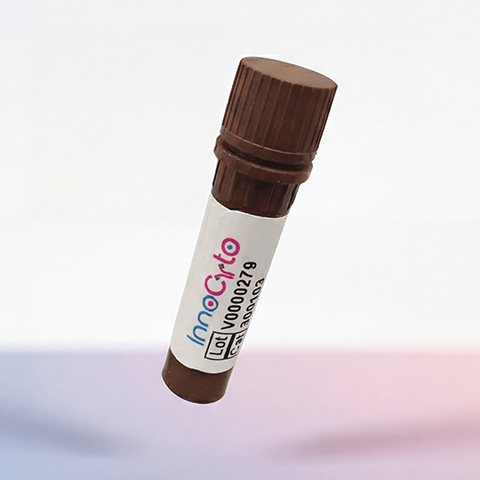
| Product Description | In vivo Grade Recombinant Anti-Human HLA Class I Heavy Chain Monoclonal Antibody |
| Isotype | Mouse IgG2a Kappa |
| Antibody Type | Recombinant |
| Regulatory Status | RUO |
| Purity | >95% by reducing SDS-PAGE |
| Endotoxin | < 1 EU per 1 mg of the protein by the LAL method. |
| Storage Conditions | 4ºC |
| Grade | In vivo |
| Recommended Usage | This product is suitable in in vitro functional assays or in vivo on human cells used in animal models. Optimal amounts need to be determined empirically for each experiment. |
| RRID | AB_3739463 |
| Research Areas | Antigen presentation, Autoimmunity, Cancer Immunology |
| See All Formats | Clone HC10 |
The HLA Class I heavy chain is a critical component of the human leukocyte antigen (HLA) class I molecule, which plays a fundamental role in adaptive immunity. Together with β2-microglobulin (β2m) and peptide antigens, the heavy chain forms the trimeric HLA class I complex found on the surface of almost all nucleated cells. Its primary function is to present intracellularly derived peptide fragments, commonly from viral or tumor proteins, to cytotoxic CD8⁺ T cells, thereby enabling immune surveillance and the elimination of infected or malignant cells.
Structurally, the HLA class I heavy chain is a transmembrane glycoprotein composed of three extracellular domains (α1, α2, and α3), a transmembrane region, and a short cytoplasmic tail. The α1 and α2 domains create the peptide-binding groove, which determines the molecule’s specificity for bound peptides. This region is highly polymorphic, giving rise to the extensive allelic diversity seen across the HLA-A, HLA-B, and HLA-C loci, diversity that is crucial for population-level adaptability to pathogens.
In research, the HLA class I heavy chain provides a versatile tool to study immune recognition, antigen processing, and disease associations. Soluble or recombinant forms of the heavy chain are widely used in structural biology to investigate peptide binding and T cell receptor interactions. Studies of allelic variations in the heavy chain have shed light on susceptibility to autoimmune diseases, infectious disease outcomes, and transplant rejection risk. Additionally, HLA class I heavy chains serve as biomarkers in cancer and viral infections, where altered expression can indicate immune evasion or stress responses.
In translational research, the heavy chain has driven advancements in immunotherapy and vaccine design. Recombinant HLA class I molecules complexed with defined peptides, known as tetramers, allow the precise identification and tracking of antigen-specific CD8⁺ T cells, providing insights into immune responses in cancer, chronic infections, and vaccination studies. Overall, the HLA class I heavy chain remains a cornerstone in immunology, linking basic molecular mechanisms to clinical applications across transplantation, oncology, and infectious disease research.
In Vivo Star Anti-Human HLA Class I Heavy Chain Antibody TDS
Anti-Human HLA-DR Antibody, Clone L243
iF488 Anti-Human HLA-DR Antibody, Clone L243
Anti-Human HLA-ABC Antibody, Clone W6/32
iF488 Anti-Human HLA-ABC Antibody, Clone W6/32
FITC Anti-Human HLA-ABC Antibody, Clone W6/32-RB
Anti-Mouse TCR β chain Antibody, Clone H57-597-M2a
iF488 Anti-Mouse TCR β chain Antibody, Clone H57-597-M2a
In Vivo Star Anti-Human HLA-DR/DP/DQ Antibody, Clone F3.3
In Vivo Star Anti-Human HLA class II DR/DQ Antibody, Clone 9.3F10
Have a product or application question? Consult our FAQs or contact us.