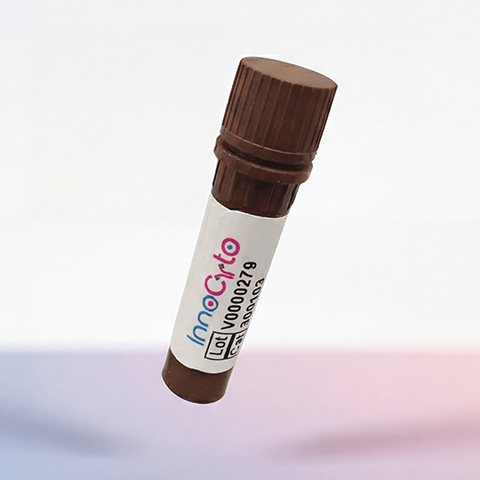
| Cat # | Size | Price | Quantity | |
|---|---|---|---|---|
| 511601 | 1 mg | $160 | ||
| 511602 | 5 mg | $400 | ||
| 511603 | 25 mg | $1100 |
| Clone | AFS98 |
|---|---|
| Application | ELISA, WB, Flow cytometry, IHC, ICC, animal model study |
| Host Species | CHO cells |
| Reactivity | Mouse |
| Format | Liquid |
| Target Name | CD115, CSF-1R, CSF1R, M-CSR, c-fms |
| Product Description | In vivo Grade Recombinant Anti-mouse CD115 Monoclonal Antibody |
| Isotype | Rat IgG2a Kappa |
| Antibody Type | Recombinant |
| Regulatory Status | RUO |
| Purity | >95% by reducing SDS-PAGE |
| Endotoxin | < 1 EU per 1 mg of the protein by the LAL method. |
| Storage Conditions | 4ºC |
| Grade | In vivo |
| Recommended Usage | This product is suitable for in vivo animal use. Optimal amounts need to be determined empirically for each experiment. |
| Research Areas | Monocytes, Macrophages, Dendritic cells, Osteoclasts, MDSCs, Inflammation, Cancer Immunology |
| See All Formats | Clone AFS98 |
CD115, also known as Colony Stimulating Factor 1 Receptor (CSF1R), is a critical cell-surface receptor that plays a fundamental role in regulating the myeloid lineage of immune cells. This receptor controls the production, differentiation, and function of macrophages and monocytes, which are essential components of the innate immune system and serve as the body's first line of defense against pathogens.
CD115 is a transmembrane tyrosine kinase receptor composed of three major structural domains: an extracellular ligand-binding domain, a transmembrane domain, and an intracellular tyrosine kinase domain. The receptor is highly expressed on myeloid cells and becomes activated upon ligand binding, triggering intracellular signaling cascades that promote cell survival, proliferation, and differentiation. CD115 can be activated by two distinct ligands: Colony Stimulating Factor 1 (CSF-1) and Interleukin-34 (IL-34). Both cytokines bind to the extracellular domain of CD115, though they may have tissue-specific expression patterns and potentially different biological outcomes.
CD115 has emerged as an important player in various pathological conditions, particularly in cancer. The receptor regulates tumor-associated macrophages (TAMs), which can promote tumor growth, angiogenesis, and immune suppression within the tumor microenvironment. Additionally, CD115 is implicated in inflammatory diseases and conditions involving abnormal macrophage activation, making it a key target for understanding immune dysregulation.
Given its role in disease, CD115 has become an attractive therapeutic target. Anti-CD115 monoclonal antibodies and small molecule CSF1R inhibitors are being developed and tested in clinical trials, particularly for cancer immunotherapy. These therapies aim to deplete or reprogram TAMs, thereby reducing tumor-promoting inflammation and enhancing anti-tumor immune responses. Blocking CD115 signaling represents a promising strategy for modulating the immune microenvironment in cancer and other immune-mediated diseases.
In Vivo Star Anti-Mouse CD115 (CSF1R) Antibody TDS
Have a product or application question? Consult our FAQs or contact us.