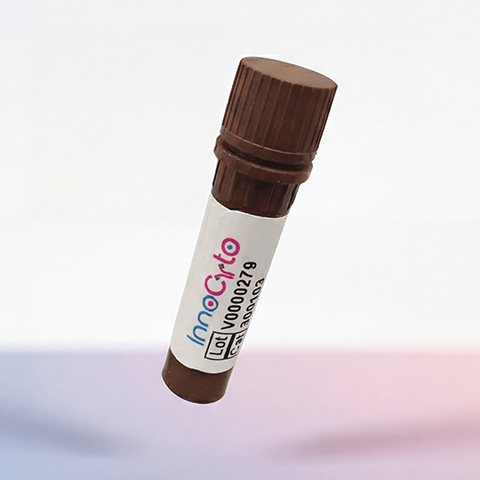
| Cat # | Size | Price | Quantity | |
|---|---|---|---|---|
| 513901 | 1 mg | $1750 | ||
| 513902 | 5 mg | $5950 | ||
| 513903 | 25 mg | $17850 |
| Clone | 10B4 / A4 |
|---|---|
| Application | Functional assay, animal model study |
| Host Species | CHO cells |
| Reactivity | Mouse |
| Format | Liquid |
| Target Name | CD370, C-type lectin family member 9A, CD47, IAP, neurophilin, gp42, Integrin-associated protein |
| Product Description | In Vivo Grade Recombinant Anti-mouse CD370 / CD47 Bispecific Antibody |
| Isotype | Mouse IgG2c LALAPG Kappa |
| Antibody Type | Recombinant |
| Regulatory Status | RUO |
| Purity | >95% by reducing SDS-PAGE |
| Endotoxin | < 1 EU per 1 mg of the protein by the LAL method. |
| Storage Conditions | 4ºC |
| Grade | In vivo |
| Recommended Usage | This product is suitable for in vivo animal use. Optimal amounts need to be determined empirically for each experiment. |
| Research Areas | Conventional Dendritic cells (cDC1s), CD16 Monocytes |
| See All Formats | Clone 10B4 / A4 |
CD370, also known as CLEC9A (C-type lectin domain family 9 member A), is an endocytic receptor found predominantly on a specialized subset of dendritic cells known as CD141⁺ (BDCA3⁺) dendritic cells in humans. These cells play a key role in the immune system by cross-presenting antigens derived from dead or damaged cells on MHC class I molecules, thereby priming cytotoxic CD8⁺ T cell responses. Structurally, CD370 is a type II transmembrane protein that contains an extracellular C-type lectin-like domain and a short cytoplasmic tail with an immunoreceptor tyrosine-based activation motif (ITAM-like) that recruits SYK kinase upon ligand engagement. Functionally, CD370 recognizes actin filaments and other damage-associated molecular patterns (DAMPs) from necrotic cells, allowing dendritic cells to efficiently capture and process antigenic material from dying tissue or tumor cells. This makes CD370 an important target for strategies that seek to enhance antigen presentation and anti-tumor immunity.
CD47, in contrast, is a ubiquitously expressed transmembrane protein that acts as a critical regulator of the innate immune system. Often termed the “don’t eat me” signal, CD47 binds to its receptor, Signal Regulatory Protein Alpha (SIRPα), on macrophages and dendritic cells. This interaction inhibits phagocytosis and promotes immune evasion by preventing the clearance of cells expressing high levels of CD47. Many cancers exploit this pathway by overexpressing CD47, effectively shielding themselves from immune recognition and destruction. Blocking CD47–SIRPα signaling has therefore emerged as a powerful immunotherapeutic strategy to promote the phagocytic clearance of tumor cells and enhance anti-tumor immune activation.
A bispecific antibody targeting both CD370 and CD47 represents an innovative approach that synergizes immune activation with inhibition of immune suppression. By simultaneously binding CD47 on tumor cells and CD370 on dendritic cells, such a molecule could facilitate the efficient uptake and processing of cancer antigens while overcoming the “don’t eat me” brake imposed by CD47 signaling. This dual mechanism would ensure that tumor cell debris is effectively internalized, processed, and presented to T cells, leading to stronger and more durable anti-tumor immune responses. Moreover, focusing activation through CD370⁺ dendritic cells could concentrate the immunologic effects within tumor-draining lymphoid tissues, potentially minimizing systemic toxicities like anemia that can occur with traditional CD47 blockade. Thus, a CD370 × CD47 bispecific antibody could bridge the innate and adaptive immune systems, marking a promising new direction in cancer immunotherapy aimed at amplifying immune recognition and long-term tumor eradication.
In Vivo Star Anti-Mouse CD370 / CD47 Bispecific Antibody TDS
In Vivo Star Anti-Mouse CD370 (CLEC9A) Antibody, Clone 10B4
In Vivo Star Anti-Mouse CD370 / CD274 (PD-L1) Bispecific Antibody, Clone 10B4 / 10F.9G2
In Vivo Star Anti-Human CD47 Antibody, Clone B6H12
Have a product or application question? Consult our FAQs or contact us.