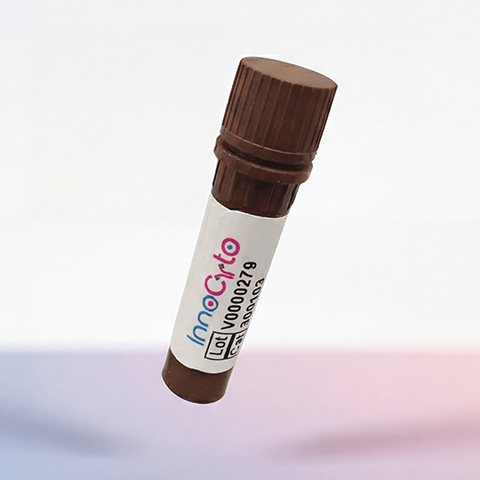
| Cat # | Size | Price | Quantity | |
|---|---|---|---|---|
| 303414 | 25 ug | $75 |
| Clone | MOPC-21-R1 |
|---|---|
| Application | Flow Cytometry |
| Reactivity | N/A |
| Format | PB |
| Target Name | Rat IgG1 Isotype Control |
| Isotype | Rat IgG1, kappa |
| Antibody Type | Monoclonal |
| Regulatory Status | RUO |
| Formulation | Phosphate-buffered solution, pH 7.2, containing 0.09% sodium azide and 0.2% (w/v) BSA |
| Protein Concentration | 0.2 mg/mL |
| Storage&Handling | Store the antibody undiluted at 2°C to 8°C. |
| Recommended Usage | Use at concentrations comparable to those used for the target-specific antibody. Pacific Blue has an excitation max at 404 nm and an emission max at 455 nm. |
| Excitation Laser | Violet laser (405nm) |
| See All Formats | Clone MOPC-21-R1 |
This antibody is a clone of the MOPC-21 variable region with a rat IgG1, κ isotype. MOPC-21 immunoglobulin has an unknown antigen specificity and is commonly used as an isotype control. It was selected based on screening across a variety of resting and activated cells, as well as live and fixed tissues from mouse, rat, and human sources.
PB Rat IgG1 Isotype Control TDS
Have a product or application question? Consult our FAQs or contact us.