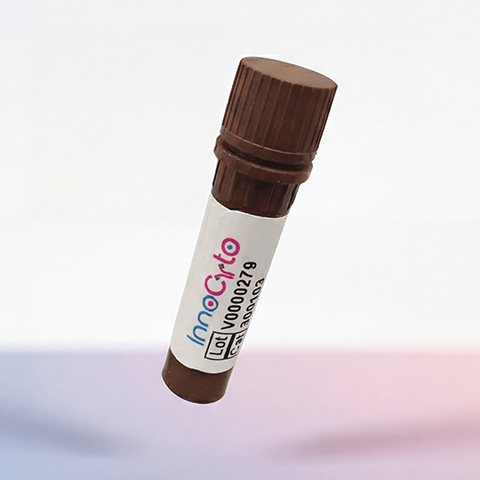
PE Rat IgG1 Isotype Control Antibody

Cat # Size Price Quantity
30010550 ug$45

Product Details


CloneRTK2071
ApplicationFlow Cytometry
ReactivityN/A
FormatPE
Target NameRat IgG1 Isotype Control
IsotypeRat IgG1
Antibody TypeMonoclonal
Regulatory StatusRUO
FormulationPhosphate-buffered solution, pH 7.2, containing 0.09% sodium azide and 0.2% (w/v) BSA
Protein Concentration0.2mg/mL
Storage&HandlingStore the antibody undiluted at 2°C to 8°C.
Recommended UsageUse at concentrations comparable to those used for the target-specific antibody. PE has an excitation max at 565 nm and an emission max at 575 nm.
Excitation LaserBlue Laser (488 nm) Green/Yellow laser (532/561nm)
RRIDAB_3739118
See All FormatsClone RTK2071

Background Information


The isotype of RTK2071 immunoglobulin is rat IgG1, κ. This antibody was chosen as an isotype control after screening on a variety of resting, activated, live, and fixed mouse, rat and human tissues.

Data Sheets


PE Rat IgG1 Isotype Control Antibody TDS

Related Protocols


Flow Cytometry Protocol

Frequently Asked Questions


What should I do if I don't see an isotype control available for my antibody of choice?
Contact Technical Support or request a quote for a custom conjugation of the appropriate isotype and fluorophore.

Why should I use an isotype control?
Isotype controls are antibodies with no known specificity for the target of interest, but matched in host species, isotype, and conjugate to your primary antibody. They are used to measure non-specific binding (e.g., Fc receptor binding, background staining) so that signal from your specific antibody can be distinguished from background noise.

What should I do if my isotype control shows high background binding?
High background is often observed due to a number of causes such as Fc binding, poor cell viability, spillover and unmixing error, as well as monocyte tandem binding. Read this brief tech note to learn about the causes and specific solutions to remove background signals: The Path to True Signals: Removing Background in Flow Cytometry.

Have a product or application question? Consult our FAQs or contact us.