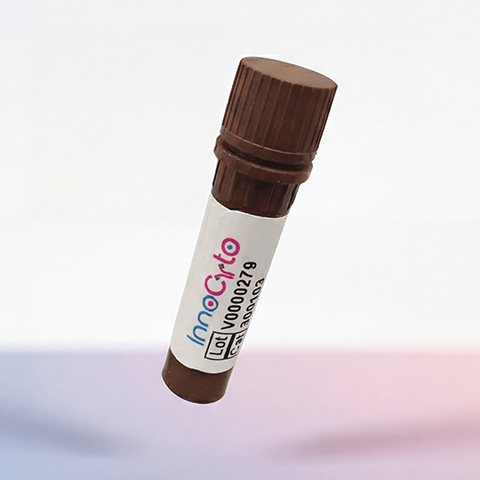
| Cat # | Size | Price | Quantity | |
|---|---|---|---|---|
| 302701 | 25 ug | $30 |
| Clone | RTK2118 |
|---|---|
| Application | Flow Cytometry |
| Reactivity | N/A |
| Format | Purified |
| Target Name | Rat IgM isotype control |
| Isotype | Rat IgM |
| Antibody Type | Monoclonal |
| Regulatory Status | RUO |
| Formulation | Phosphate-buffered solution, pH 7.2, containing 0.09% sodium azide |
| Protein Concentration | 0.5 mg/mL |
| Storage&Handling | Store the antibody undiluted at 2°C to 8°C. |
| Recommended Usage | Use at concentrations comparable to those used for the target-specific antibody. |
| RRID | AB_3739230 |
| See All Formats | Clone RTK2118 |
Immunoglobulin M (IgM) is the largest antibody isotype and the first produced during an initial immune response. Structurally, it forms a pentamer of five immunoglobulin units, giving it a high molecular weight of about 900 kDa and up to ten antigen-binding sites, though not all can engage simultaneously. Because of its size, IgM remains primarily in the serum and is produced largely in the spleen. Rat IgM functions similarly, serving as an early, broad-acting antibody produced by rat B cells to recognize and neutralize pathogens. It is widely used in research—as a control reagent, in diagnostic assays, and in studies of infection and immunity. Various established laboratory methods exist for producing and purifying rat IgM, making it a valuable tool for advancing immunological understanding and supporting the development of new disease treatments
Rat IgM Isotype Control Antibody TDS
Have a product or application question? Consult our FAQs or contact us.