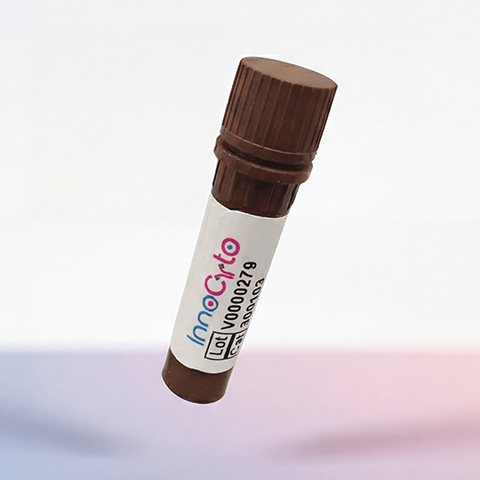
| Cat # | Size | Price | Quantity | |
|---|---|---|---|---|
| 632501 | 20 μg | $350 | ||
| 632502 | 100 μg | $750 |
| Application | Bioassay |
|---|---|
| Format | Lyophilized from sterile PBS, pH 7.4. |
| Expression Host | E.coli |
| Target Name | IL-11, interleukin-11, Adipogenesis Inhibitory Factor |
| Species | Human |
| accession number | P20809-1 |
| Sources | A DNA sequence encoding the mature form of human IL11 (P20809-1) (Pro22-Leu199) was expressed. |
| Molecular Weight | The recombinant human IL11 consists of 178 amino acids and predicts a molecular mass of 19.12 KDa. |
| Affinity Tag | None |
| Purity | ≥ 90 % as determined by SDS-PAGE. |
| Regulatory Status | RUO |
| Endotoxin level | < 1.0 EU per μg protein |
| Protein Concentration | Lyophilized |
| Storage and Handling | Samples are stable for up to twelve months from date of receipt at -20℃ to -80℃. Store it under sterile conditions at -20℃ to -80℃. It is recommended that the protein be aliquoted for optimal storage. Avoid repeated freeze-thaw cycles. |
Human interleukin-11 (IL-11) is a pleiotropic cytokine belonging to the IL-6 family. It participates in hematopoiesis, platelet production, cell survival, tissue repair, and regulation of stromal-cell functions. IL-11 signaling occurs when IL-11 binds its specific cell-surface receptor, IL-11 receptor alpha (IL-11Rα), which then associates with the shared signal-transducing receptor gp130. This complex activates intracellular pathways including JAK/STAT3, ERK/MAPK, and PI3K/AKT, with effects that depend on the cell type and biological context.
Human IL-11 is a relatively small, secreted, non-glycosylated protein of approximately 19 kDa and 178 amino acids. Structurally, it adopts the characteristic four-α-helical bundle fold of IL-6-family cytokines. IL-11 first forms a 1:1 complex with IL-11Rα and subsequently recruits gp130. Two such complexes can assemble into a higher-order signaling complex that brings the intracellular regions of gp130 together and initiates signal transduction.
IL-11 has important physiological functions, but abnormal or sustained signaling has been implicated in disease. Elevated IL-11 activity is associated with fibrosis and fibroinflammatory disorders affecting the lung, heart, liver, kidney, and other tissues. It can promote fibroblast activation, extracellular-matrix production, tissue remodeling, and chronic inflammation. IL-11 signaling has also been implicated in several cancers, where it may support tumor-cell survival, proliferation, invasion, and progression.
These findings have made the IL-11 pathway an attractive therapeutic target. Experimental approaches include neutralizing antibodies against IL-11 or IL-11Rα, receptor antagonists, and engineered IL-11 variants that prevent productive receptor-complex formation. Recent studies have reported encouraging activity from IL-11Rα blockade in fibroinflammatory disease, including thyroid eye disease. Thus, inhibiting excessive IL-11 signaling may provide a strategy for treating fibrosis and selected inflammatory or cancer-related disorders while preserving the normal physiological functions of the cytokine.
Recombinant human IL-11 Protein TDS
Have a product or application question? Consult our FAQs or contact us.