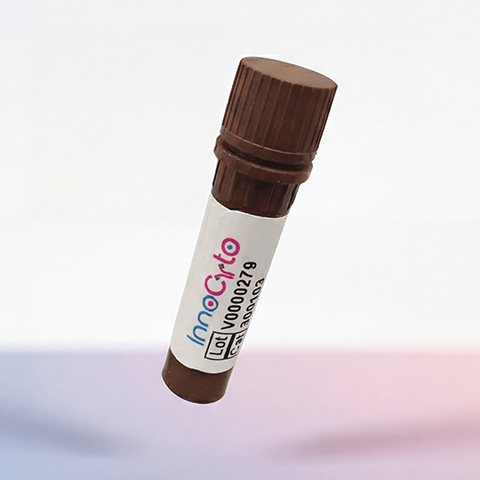
| Cat # | Size | Price | Quantity | |
|---|---|---|---|---|
| 632401 | 20 μg | $375 | ||
| 632402 | 100 μg | $825 |
| Application | Bioassay |
|---|---|
| Format | Lyophilized from sterile 100mM GLY, 10mM NaCl, pH 3.0 |
| Expression Host | Stable CHO |
| Target Name | TGFb1, TGFB, transforming growth factor, TGF-Beta-1, Transforming Growth Factor Beta 1 |
| Species | Human |
| accession number | NP_000651.3 |
| Sources | A DNA sequence encoding the active form of human / rhesus / cynomolgus / canine TGFβ1 (NP_000651.3) (Ala 279-Ser 390) was expressed and purified. Human, Rhesus, cynomolgus and Canine TGFβ1 sequences are identical. |
| Molecular Weight | The recombinant human / rhesus / cynomolgus / canine TGFβ1 consists of 112 amino acids and has a calculated molecular mass of 12.8 kDa. it migrates as an approximately 13 & 26 kDa band in reduced and non-reduced SDS-PAGE respectively, corresponding to the monomer and homodimer. |
| Affinity Tag | None |
| Purity | ≥ 95 % as determined by SDS-PAGE |
| Regulatory Status | RUO |
| Endotoxin level | < 1.0 EU per μg protein |
| Protein Concentration | Lyophilized |
| Storage and Handling | Samples are stable for up to twelve months from date of receipt at -20℃ to -80℃. Store it under sterile conditions at -20℃ to -80℃. It is recommended that the protein be aliquoted for optimal storage. Avoid repeated freeze-thaw cycles. |
Human TGF-β1 (transforming growth factor beta 1) is a multifunctional cytokine that regulates cell proliferation, differentiation, migration, immune responses, extracellular-matrix production, wound healing, and tissue homeostasis. It is particularly important for controlling immune activity and maintaining normal tissue repair. TGF-β1 signals primarily through a receptor complex consisting of TGF-β receptor type II (TGFBR2) and type I (TGFBR1/ALK5), activating SMAD2/3 and other downstream pathways.
Structurally, mature human TGF-β1 is a 112-amino-acid polypeptide that forms a disulfide-linked homodimer of approximately 25 kDa. It has the characteristic cysteine-rich structure of the TGF-β superfamily, including a conserved cysteine-knot motif. TGF-β1 is synthesized as a larger precursor containing an N-terminal signal peptide, a latency-associated peptide (LAP), and the C-terminal mature growth-factor domain. After processing, LAP remains associated with mature TGF-β1, maintaining it in an inactive latent complex.
The major ligands closely related to TGF-β1 are TGF-β2 and TGF-β3. TGF-β1 binds TGFBR2 and subsequently recruits TGFBR1, while the co-receptor betaglycan (TGFBR3) can modulate ligand presentation and signaling. TGF-β1 activity is normally tightly regulated because excessive or prolonged signaling can contribute to fibrosis, cancer progression, chronic inflammation, and abnormal tissue remodeling. In cancer, TGF-β1 can suppress immune responses and promote tumor invasion and metastasis, while excessive signaling in organs such as the lung, liver, kidney, and heart can promote fibrosis.
Because of these effects, TGF-β1 is an important therapeutic target. Approaches under investigation include neutralizing antibodies, ligand traps, inhibitors of TGFBR1 kinase activity, and strategies that prevent activation of latent TGF-β1. Such therapies are being studied particularly for cancer and fibrotic diseases. However, because TGF-β1 is essential for normal immune regulation and tissue repair, therapeutic inhibition must be carefully controlled to avoid disrupting beneficial physiological functions.
Recombinant human TGFβ1 Protein TDS
Have a product or application question? Consult our FAQs or contact us.