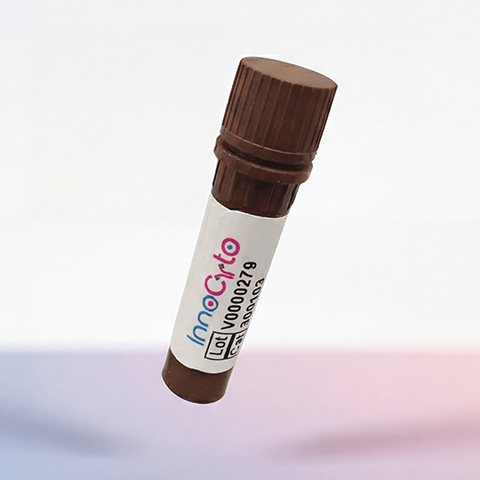
| Cat # | Size | Price | Quantity | |
|---|---|---|---|---|
| 632601 | 100 μg | $300 | ||
| 632602 | 1 mg | $1800 |
| Application | Bioassay |
|---|---|
| Format | Lyophilized from sterile PBS, pH 7.4. |
| Expression Host | HEK293 |
| Target Name | VCAM-1, CD106, INCAM-100, Vascular cell adhesion molecule 1, VCAM1 |
| Species | Human |
| accession number | NP_001069.1 |
| Sources | A DNA sequence encoding the extracellular domain (Met 1-Pro 697) of human VCAM1 (NP_001069.1) was expressed with the Fc region of human IgG1 at the C-terminus. |
| Molecular Weight | The recombinant human VCAM1/Fc is a disulfide-linked homodimeric protein. The reduced monomer consists of 911 amino acids and has a predicted molecular mass of 100.8 kDa. As a result of glycosylation, the rh VCAM1/Fc monomer migrates as an approximately 116.3 kDa band in SDS-PAGE under reducing conditions. |
| Affinity Tag | C-hIgG1 Fc |
| Purity | ≥ 95 % as determined by SDS-PAGE. ≥ 90 % as determined by SEC-HPLC. |
| Regulatory Status | RUO |
| Endotoxin level | < 1.0 EU per μg protein |
| Protein Concentration | Lyophilized |
| Storage and Handling | Samples are stable for up to twelve months from date of receipt at -20℃ to -80℃. Store it under sterile conditions at -20℃ to -80℃. It is recommended that the protein be aliquoted for optimal storage. Avoid repeated freeze-thaw cycles. |
Human VCAM-1 (vascular cell adhesion molecule-1), also known as CD106, is a cytokine-inducible cell-adhesion molecule belonging to the immunoglobulin (Ig) superfamily. It is expressed primarily on activated vascular endothelial cells, where it helps regulate the recruitment of leukocytes from the bloodstream into inflamed tissues. VCAM-1 is particularly important for leukocyte firm adhesion and transendothelial migration, thereby contributing to both normal immune surveillance and inflammatory responses.
VCAM-1 is a type I transmembrane glycoprotein. The full-length human protein contains seven extracellular Ig-like domains, followed by a single transmembrane region and a short cytoplasmic tail. Alternative splicing produces a six-domain isoform that lacks domain 4. The extracellular domains contain disulfide bonds and N-linked glycosylation sites. Domains 1 and 4 are particularly important for integrin binding.
The principal ligands of VCAM-1 are the leukocyte integrins α4β1 (VLA-4) and α4β7. Additional interactions have been reported with α9β1 and αDβ2 integrins, as well as galectin-3 through VCAM-1 glycosylation sites. Binding of α4β1 to VCAM-1 promotes leukocyte adhesion and migration across the vascular endothelium.
Abnormal VCAM-1 expression is associated with atherosclerosis, rheumatoid arthritis, asthma, inflammatory bowel disease, multiple sclerosis, transplant rejection, and cancer. Elevated VCAM-1 can facilitate inflammatory-cell recruitment and, in cancer, may contribute to tumor invasion, angiogenesis, and metastasis. Consequently, the VCAM-1 pathway is an attractive therapeutic target. Strategies include antibodies or other agents that block VCAM-1–integrin interactions, as well as approaches targeting VCAM-1 expression or endothelial signaling. Clinically, inhibition of its α4-integrin ligand with natalizumab demonstrates the therapeutic potential of disrupting this pathway, although systemic blockade can have significant safety limitations. VCAM-1 is also being investigated as a biomarker and as a target for targeted diagnostic or therapeutic delivery systems.
Recombinant Human VCAM-1/CD106 (Fc Tag) Protein TDS
Have a product or application question? Consult our FAQs or contact us.