| Cat # | Size | Price | Quantity | |
|---|---|---|---|---|
| 506401 | 1 mg | $175 | ||
| 506402 | 5 mg | $550 | ||
| 506403 | 20 mg | $1100 |
| Clone | Tremelimumab |
|---|---|
| Application | Flow cytometry, animal model study |
| Host Species | Mammalian cells |
| Reactivity | Human |
| Format | Liquid |
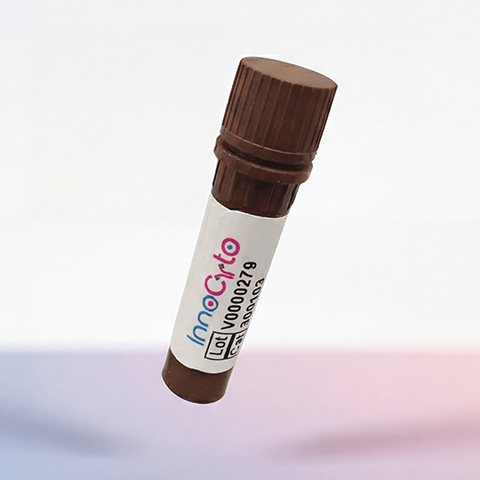
| Product Description | Tremelimumab Biosimilar, Human CTLA-4 monoclonal Antibody |
| Isotype | Human IgG2 |
| Regulatory Status | RUO |
| Clonality | Recombinant |
| Immunogen | Human CTLA-4 |
| Species specificity | Human |
| Purity | >95% by reducing SDS-PAGE |
| Grade | In vivo |
| Storage Conditions | 4ºC |
| Maximal Shelf Life | 12 months |
| Synonyms | CD152 |
| RRID | AB_3739339 |
| Target Name | CTLA4, CD152, CELIAC3, GSE, IDDM12 |
| Antibody Type | Recombinant |
| Research Areas | Tregs, Activated T cells, Autoimmunity, Immune Checkpoints, Cancer Immunology |
| See All Formats | Clone Tremelimumab |
Tremelimumab is a fully human monoclonal antibody belonging to the immunoglobulin G2 (IgG2) subclass, designed to specifically bind to cytotoxic T-lymphocyte–associated protein 4 (CTLA-4, also known as CD152). Structurally, it is a glycoprotein with an approximate molecular weight of 147 kilodaltons (kDa). The molecule consists of two identical heavy chains and two identical light chains joined by interchain disulfide bonds, forming the classic Y-shaped IgG configuration. Each heavy chain includes one variable (VH) and three constant (CH1-CH3) domains, while each light chain comprises one variable (VL) and one constant (CL) domain. Tremelimumab is produced in mammalian expression systems, such as Chinese Hamster Ovary (CHO) cells, ensuring correct folding, assembly, and human-like glycosylation.
The complementarity-determining regions (CDRs) within Tremelimumab’s variable domains define its high-affinity and specific recognition of an epitope on the extracellular portion of CTLA-4. CTLA-4 is an immune checkpoint receptor expressed on activated T cells and regulatory T cells, functioning as an inhibitory regulator of T-cell signaling. Tremelimumab binds to CTLA-4 with nanomolar affinity through a network of hydrogen bonds and hydrophobic interactions, preventing CTLA-4 from engaging its natural ligands, CD80 (B7-1) and CD86 (B7-2), on antigen-presenting cells. By blocking this interaction, the antibody inhibits the suppressive signaling pathways normally mediated by CTLA-4, thereby facilitating the co-stimulatory interaction between CD28 and B7 molecules in experimental immunological systems. This results in enhanced T-cell activation and proliferation through the modulation of intracellular kinases and transcriptional regulators such as ZAP-70 and NFAT.
The Fc (fragment crystallizable) region of Tremelimumab, characteristic of the IgG2 subclass, provides structural integrity and contributes to a long systemic half-life through neonatal Fc receptor (FcRn) recycling. Compared with IgG1 antibodies, the IgG2 isotype exhibits reduced complement activation and limited antibody-dependent cellular cytotoxicity (ADCC). Overall, Tremelimumab represents a rationally engineered human IgG2 monoclonal antibody optimized for high-affinity checkpoint receptor blockade, structural stability, and defined modulation of T-cell–mediated immune responses in mechanistic studies of immune regulation.
Anti-Human CTLA-4 (Tremelimumab Biosimilar) TDS
Anti-Human CD80 (Galiximab Biosimilar), Clone Galiximab
Human B7-1 (CD80) Protein (C-His-Avi)
Biotin Human B7-1 (CD80) Protein (C-His-Avi)
Human B7-1 (CD80) Protein (C-His)
Have a product or application question? Consult our FAQs or contact us.