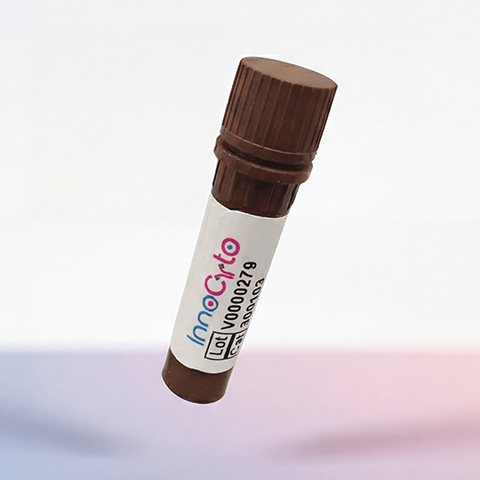
| Cat # | Size | Price | Quantity | |
|---|---|---|---|---|
| 506201 | 1 mg | $650 |
| Clone | Trastuzumab |
|---|---|
| Application | Flow cytometry, animal model study |
| Host Species | Mammalian cells |
| Reactivity | Human |
| Format | Liquid |
| Product Description | Trastuzumab Biosimilar, L234A L235A P329G (LALAPG) Fc Silent Mutant |
| Isotype | Human IgG1, L234A L235A P329G (LALAPG) |
| Regulatory Status | RUO |
| Clonality | Recombinant |
| Immunogen | A431 cells overexpressing human EGFR |
| Clone Number | 4D5-8 |
| Species specificity | Human |
| Purity | >95% by reducing SDS-PAGE |
| Grade | In vivo |
| Storage Conditions | 4ºC |
| Maximal Shelf Life | 12 months |
| Synonyms | CD340, HER2 |
| RRID | AB_3739337 |
| Target Name | HER2, HER-2, ERBB2, CD340, MLN19, NEU, NGL, TKR1 |
| Antibody Type | Recombinant |
| Research Areas | Mesenchymal Stem Cells, Embryogenesis, Cancer Marker, Cancer Immunology |
| See All Formats | Clone Trastuzumab |
Trastuzumab is a recombinant humanized monoclonal antibody belonging to the immunoglobulin G1 (IgG1) subclass, engineered to specifically recognize the human epidermal growth factor receptor 2 (HER2, also known as ErbB2). Structurally, the molecule has a molecular weight of approximately 148 kilodaltons (kDa) and retains the typical Y-shaped configuration of IgG antibodies, consisting of two identical heavy chains and two identical light chains connected by disulfide bonds. Each heavy chain contains one variable (VH) domain and three constant (CH1-CH3) domains, while each light chain comprises one variable (VL) and one constant (CL) domain. Trastuzumab is produced in mammalian expression systems, such as Chinese Hamster Ovary (CHO) cells, ensuring proper glycosylation and structural fidelity.
The antigen-binding sites of Trastuzumab, located within the complementarity-determining regions (CDRs) of its VH and VL domains, exhibit high specificity for an extracellular epitope on subdomain IV of the HER2 receptor. The binding interaction is stabilized by a network of hydrogen bonds and hydrophobic contacts, characterized by sub-nanomolar affinity. This precise molecular recognition prevents receptor interactions that influence downstream signaling, thus modulating various intracellular signaling cascades involved in cell proliferation and survival within experimental systems that model receptor-mediated signaling pathways.
This Fc-silent antibody mutant is genetically engineered with mutations in its tail (Fc region) that prevent it from activating the immune system's effector functions (like cell killing), allowing it to act purely as a blocker or binder without triggering unwanted inflammation.
Anti-Human HER2 (Trastuzumab Biosimilar) TDS
Human HER2 (CD340) Protein (C-His-Avi)
Biotin Human HER2 (CD340) Protein (C-His-Avi)
Human HER2 (CD340) Protein (C-His)
Anti-Human HER2 (Pertuzumab Biosimilar), Clone Pertuzumab
PE Human HER2 (CD340) Protein (C-His)
APC Human HER2 (CD340) Protein (C-His)
Have a product or application question? Consult our FAQs or contact us.