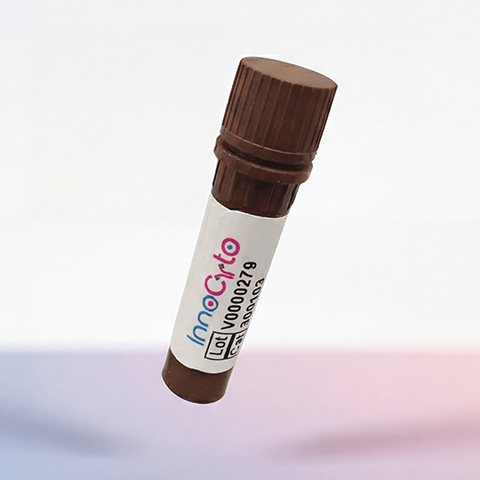
| Cat # | Size | Price | Quantity | |
|---|---|---|---|---|
| 502501 | 1 mg | $250 | ||
| 502502 | 5 mg | $650 | ||
| 502503 | 20 mg | $2000 |
| Clone | Envafolimab |
|---|---|
| Application | Flow cytometry, animal model study |
| Host Species | Mammalian cells |
| Reactivity | Human |
| Format | Liquid |
| Product Description | Anti-Human PD-L1 (Envafolimab Biosimilar) |
| Isotype | Human IgG1 |
| Regulatory Status | RUO |
| Clonality | Recombinant |
| Immunogen | Human PD-L1 |
| Species specificity | Human |
| Purity | >95% by reducing SDS-PAGE |
| Grade | In vivo |
| Storage Conditions | 4ºC |
| Maximal Shelf Life | 12 months |
| Synonyms | CD274, B7-H1 |
| RRID | AB_3739301 |
| Target Name | PD-L1, PDL1 CD274, B7-H1 |
| Antibody Type | Recombinant |
| Research Areas | Activated T cells, Activated B cells, Monocytes, Macrophages, Dendritic cells, NK cells, Immune Checkpoints, Cancer Immunology |
| See All Formats | Clone Envafolimab |
Envafolimab, also known as KN035, is a novel recombinant single-domain antibody–Fc fusion protein engineered to specifically target programmed death-ligand 1 (PD-L1). Structurally, Envafolimab is distinct from conventional monoclonal antibodies because it consists of only the heavy-chain variable domain (VH) derived from camelid antibody fragments, fused directly to the Fc (fragment crystallizable) region of human immunoglobulin G1 (IgG1). This configuration results in a smaller, single-chain architecture with a molecular weight of approximately 80 kilodaltons (kDa), roughly half that of a full-length IgG molecule. The molecule is produced in mammalian expression systems to maintain proper folding, disulfide bond formation, and glycosylation within the Fc portion.
The single-domain variable region of Envafolimab provides specificity for PD-L1 through high-affinity interactions dominated by hydrogen bonding and hydrophobic contacts. Upon binding, Envafolimab effectively blocks PD-L1 from engaging its receptors, programmed death-1 (PD-1) and B7.1 (CD80), on activated T lymphocytes and antigen-presenting cells. This blockade disrupts inhibitory signaling pathways that would otherwise reduce T-cell proliferation and cytokine secretion. Functionally, this mechanism restores or enhances immune cell activation in experimental systems, making Envafolimab a valuable tool for the study of immune checkpoint regulation and ligand–receptor signaling.
The Fc region of Envafolimab contributes structural stability, mediates dimerization, and extends circulatory half-life through interactions with neonatal Fc receptors (FcRn), which protect the molecule from lysosomal degradation. Because the Fc segment is derived from IgG1, it retains potential for limited Fc receptor binding, though it is not primarily designed for effector function. The compact and stable single-domain architecture grants Envafolimab notable advantages in solubility, tissue penetration, and molecular stability. Overall, Envafolimab exemplifies advanced protein engineering that fuses minimal antigen-binding domains with antibody Fc functionality to create a small, high-affinity immune checkpoint inhibitor optimized for mechanistic and biochemical research applications.
Anti-Human PD-L1 (Envafolimab Biosimilar) TDS
Anti-Human CD80 (Galiximab Biosimilar), Clone Galiximab
Human B7-1 (CD80) Protein (C-His-Avi)
Biotin Human B7-1 (CD80) Protein (C-His-Avi)
Human B7-1 (CD80) Protein (C-His)
Anti-Human PD-L1 (Durvalumab Biosimilar), Clone Durvalumab
Have a product or application question? Consult our FAQs or contact us.