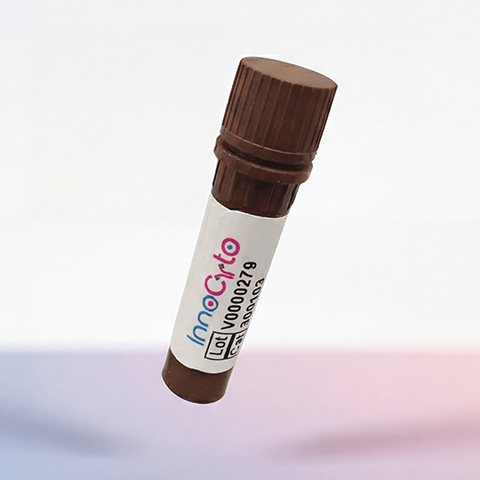
| Cat # | Size | Price | Quantity | |
|---|---|---|---|---|
| 503301 | 1 mg | $125 | ||
| 503302 | 5 mg | $400 | ||
| 503303 | 20 mg | $800 |
| Clone | Infliximab |
|---|---|
| Application | Neutralization, Intracellular Flow cytometry, animal model study |
| Host Species | Mammalian cells |
| Reactivity | Human |
| Format | Liquid |
| Product Description | Infliximab Biosimilar, TNF alpha Monoclonal Antibody |
| Isotype | Human IgG1 |
| Regulatory Status | RUO |
| Clonality | Recombinant |
| Immunogen | Recombinant human TNF protein |
| Clone Number | cA2 |
| Species specificity | Human |
| Purity | >95% by reducing SDS-PAGE |
| Grade | In vivo |
| Min Sample Size | 1 mg |
| Storage Conditions | 4ºC |
| Maximal Shelf Life | 12 months |
| Synonyms | TNFa |
| Target Name | TNFα |
| Research Areas | Cytokines, Monocytes, Macrophages, Neutrophils, T cells, Inflammation, Autoimmunity |
| See All Formats | Clone Infliximab |
Infliximab is a chimeric monoclonal antibody belonging to the immunoglobulin G1 kappa (IgG1κ) subclass, engineered to specifically bind and neutralize tumor necrosis factor-alpha (TNF-α), a proinflammatory cytokine. Structurally, Infliximab is a glycoprotein with a molecular weight of approximately 149 kilodaltons (kDa). It is composed of two identical heavy chains and two identical light chains connected by disulfide bonds, forming the characteristic Y-shaped antibody structure. The molecule combines murine (mouse-derived) variable regions with human constant regions, thereby retaining antigen specificity while exhibiting improved molecular compatibility with human immune system components. It is expressed in mammalian cell systems, such as Chinese Hamster Ovary (CHO) cells, to ensure proper folding, disulfide linkage formation, and glycosylation.
The antigen-binding fragments (Fab) of Infliximab contain complementarity-determining regions (CDRs) within the variable domains of both heavy (VH) and light (VL) chains. These CDRs form a high-affinity binding site that specifically recognizes and binds to soluble and transmembrane forms of TNF-α. The binding interface is stabilized by hydrogen bonds and hydrophobic interactions, producing nanomolar-level affinity. By occupying key epitopes on TNF-α, Infliximab prevents it from engaging its native receptors (TNFR1 and TNFR2) on target cells, thereby inhibiting downstream signaling cascades such as the NF-κB and MAPK pathways, which regulate cytokine production, apoptosis, and cell activation in experimental systems.
The Fc (fragment crystallizable) region of the human IgG1 portion provides Infliximab with structural stability, extended serum half-life through neonatal Fc receptor (FcRn) recycling, and the potential for engaging Fc gamma receptors (FcγRs). This enables effector mechanisms such as complement activation and antibody-dependent cellular cytotoxicity (ADCC) in vitro. Overall, Infliximab represents a rationally designed chimeric IgG1 antibody that combines specific cytokine neutralization with structural robustness, an essential model for exploring antibody-mediated modulation of immune signaling pathways in biochemical and cellular research.
Anti-Human TNF alpha (Infliximab Biosimilar) TDS
Anti-Human TNFα (Adalimumab Biosimilar), Clone Adalimumab
Have a product or application question? Consult our FAQs or contact us.