| Cat # | Size | Price | Quantity | |
|---|---|---|---|---|
| 601301 | 25 ug | $195 | ||
| 601302 | 100 ug | $395 |
| Application | ELISA, BLI |
|---|---|
| Format | Liquid, Purified |
| Expression Host | CHO |
| Target Name | Palmitoyl-protein thioesterase 1 |
| Species | Human |
| Accession Number | P50897.1 |
| Sources | human PPT1 (Asp28-Gly306) with C-terminus DYKDDDDK tag was expressed in CHO cells |
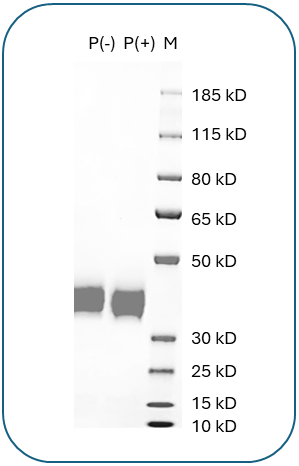
| Molecular Weight | This protein has a predicted molecular weight of 32.6 kDa. Under DTT-reducing conditions, the protein migrates at approximately 35-40 kDa on SDS-PAGE. |
| Affinity Tag | C-DYKDDDDK |
| Purity | >95% based on SDS-PAGE under reducing condition |
| Regulatory Status | RUO |
| Formulation | 1xPBS buffer, pH6.5, 0.22 µm filtered |
| Endotoxin level | Not tested |
| Protein Concentration | 25µg size is bottled at 0.2mg/mL concentration. 100 µg size is supplied at a lot-specific concentration. |
| Storage and Handling | Briefly centrifuge the vial upon receipt. An unopened vial can be stored at 4°C for up to 2 weeks, or at -20°C or below for up to six months. The protein may be further diluted to 0.1 mg/mL using 0.22 µm-filtered PBS buffer (pH 7.4). For long-term storage, the diluted stock solution should be aliquoted and stored at ≤ –70°C to minimize freeze-thaw cycles. If additional dilution is required, carrier proteins such as FBS or BSA should be added to maintain protein stability. |
| Research Areas | Metabolism |
Palmitoyl-protein thioesterase 1 (PPT1) is a lysosomal enzyme that hydrolyzes thioester-linked palmitate from S-palmitoylated proteins, facilitating their degradation during lysosomal processing. PPT1 is a glycosylated monomer with a catalytic triad and fatty acid-binding groove, and plays a key role in the autophagy-lysosome pathway. Mutations in the PPT1 gene cause infantile neuronal ceroid lipofuscinosis (INCL), a severe lysosomal storage disorder characterized by accumulation of lipid-modified proteins, leading to neurodegeneration, mental retardation, and early death. In addition to INCL, impaired PPT1 function has been associated with Huntington’s disease, Alzheimer’s disease, schizophrenia, and cancer, due to its influence on synaptic function and protein trafficking.
Human PPT1 Protein (C-FLAG) TDS
Have a product or application question? Consult our FAQs or contact us.