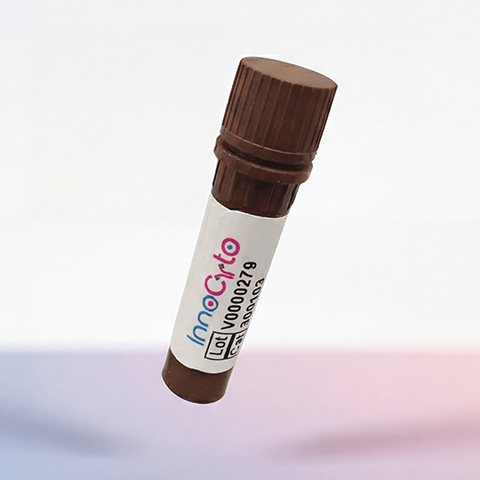
| Cat # | Size | Price | Quantity | |
|---|---|---|---|---|
| 518001 | 1 mg | $160 | ||
| 518002 | 5 mg | $400 | ||
| 518003 | 25 mg | $1100 |
| Clone | 2H7 |
|---|---|
| Application | Direct ELISA, functional assay, Flow Cytometry |
| Host Species | CHO cells |
| Reactivity | Human |
| Format | Liquid |
| Target Name | CD20, MS4A-1 |
| Product Description | In vivo Grade Recombinant Anti-Human CD20 Monoclonal Antibody |
| Isotype | Mouse IgG2b Kappa |
| Antibody Type | Recombinant |
| Regulatory Status | RUO |
| Purity | >95% by reducing SDS-PAGE |
| Endotoxin | < 1 EU per 1 mg of the protein by the LAL method. |
| Storage Conditions | 4ºC |
| Grade | In vivo |
| Recommended Usage | This product is suitable in in vitro functional assays or in vivo on human cells used in animal models. Optimal amounts need to be determined empirically for each experiment. |
| Research Areas | B cells, Cancer Marker |
| See All Formats | Clone 2H7 |
CD20 is a B cell-specific surface molecule that plays a key role in B cell activation and regulation and is best known as one of the most successful therapeutic targets in immunology and oncology. It is expressed on B cells from the late pre-B cell stage through mature and memory B cells but is absent on early pro-B cells and terminally differentiated plasma cells. This expression pattern makes CD20 an ideal marker for identifying and targeting the majority of circulating and tissue-resident B cells.
Structurally, CD20 is a small, non-glycosylated integral membrane protein with four transmembrane helices, two extracellular loops, and intracellular N- and C-terminal domains. Unlike many CD molecules, CD20 does not belong to the immunoglobulin superfamily and lacks a long cytoplasmic signaling motif. Instead, CD20 is thought to function as part of a membrane complex involved in ion transport, particularly calcium flux, which is critical for B cell activation and proliferation. Functionally, CD20 contributes to the regulation of B cell receptor (BCR) signaling by influencing calcium entry following antigen engagement. Through modulation of intracellular calcium levels, CD20 affects B cell activation, cell cycle progression, and differentiation. While CD20 is not essential for B cell development, it plays an important role in optimizing B cell responses during immune activation. A notable feature of CD20 is that it does not have a clearly defined natural ligand. Its activity appears to be mediated through homotypic interactions, association with other membrane proteins, and organization within lipid rafts rather than classical ligand–receptor binding. This lack of ligand has not limited its therapeutic utility, as CD20 is stably expressed and poorly internalized, properties that are advantageous for antibody-based targeting.
CD20 is implicated in a range of diseases characterized by pathological B cell activity. It is highly expressed on most B cell non-Hodgkin lymphomas and chronic lymphocytic leukemia, making it a valuable diagnostic marker. In autoimmune diseases such as rheumatoid arthritis, multiple sclerosis, and systemic lupus erythematosus, autoreactive CD20⁺ B cells contribute to disease progression through autoantibody production and antigen presentation.
Therapeutically, CD20 has revolutionized the treatment of B cell-mediated diseases. Monoclonal antibodies targeting CD20 deplete B cells through mechanisms including antibody-dependent cellular cytotoxicity, complement-dependent cytotoxicity, and induction of apoptosis. CD20-targeted therapies are widely used in hematologic malignancies and autoimmune disorders and have established B cell depletion as a powerful and durable therapeutic strategy.
In Vivo Star Anti-Human CD20 Antibody TDS
Anti-Human CD19 Antibody, Clone HIB19
iF560 Anti-Human CD19 Antibody, Clone HIB19
iF647 Anti-Human CD19 Antibody, Clone 019AM2b
Biotin Anti-Human CD19 Antibody, Clone 019AM2b
PE Human CD20 Protein (TrxA tag)
APC Human CD20 Protein (TrxA tag)
Anti-Human CD20 Antibody, Clone 020AR1
iF488 Anti-Human CD20 Antibody, Clone 020AR1
Anti-Human CD20 (Obinutuzumab Biosimilar), Clone Obinutuzumab
Have a product or application question? Consult our FAQs or contact us.