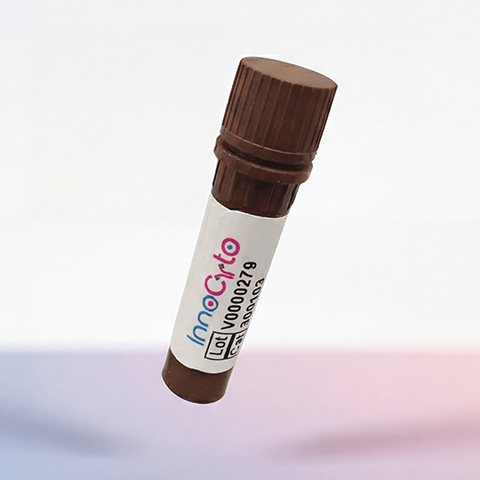
| Cat # | Size | Price | Quantity | |
|---|---|---|---|---|
| 518601 | 1 mg | $160 | ||
| 518602 | 5 mg | $400 | ||
| 518603 | 25 mg | $1100 |
| Clone | W6/32 |
|---|---|
| Application | Direct ELISA, functional assay, Flow Cytometry |
| Host Species | CHO cells |
| Reactivity | Human |
| Format | Liquid |
| Target Name | HLA-ABC, Major Histocompatibility Class I, MHC class I |
| Product Description | In vivo Grade Recombinant Anti-Human HLA-ABC Monoclonal Antibody |
| Isotype | Mouse IgG2a Kappa |
| Antibody Type | Recombinant |
| Regulatory Status | RUO |
| Purity | >95% by reducing SDS-PAGE |
| Endotoxin | < 1 EU per 1 mg of the protein by the LAL method. |
| Storage Conditions | 4ºC |
| Grade | In vivo |
| Recommended Usage | This product is suitable in in vitro functional assays or in vivo on human cells used in animal models. Optimal amounts need to be determined empirically for each experiment. |
| Research Areas | Antigen presentation, Autoimmunity, Cancer Immunology |
| See All Formats | Clone W6/32 |
HLA-ABC refers to the classical human leukocyte antigen (HLA) class I molecules, HLA-A, HLA-B, and HLA-C, encoded within the major histocompatibility complex (MHC) on chromosome 6. These molecules are expressed on the surface of nearly all nucleated cells and play a pivotal role in the adaptive immune response. Their main function is to present endogenously derived peptide antigens, typically from intracellular proteins, to cytotoxic CD8⁺ T lymphocytes. This antigen presentation enables the immune system to continuously monitor cell integrity and identify cells infected by viruses or transformed by cancer.
Structurally, HLA class I molecules are heterodimeric complexes consisting of a transmembrane heavy (alpha) chain and a non-covalently associated light chain known as β2-microglobulin. The heavy chain comprises three extracellular domains (α1, α2, and α3), a transmembrane region, and a short cytoplasmic tail. The peptide-binding groove is formed by the α1 and α2 domains and accommodates short peptides 8–10 amino acids in length. Peptides are generated through proteasomal degradation of intracellular proteins and transported into the endoplasmic reticulum by TAP (Transporter Associated with Antigen Processing) proteins, where they bind to nascent HLA-I molecules before being shuttled to the cell surface.
Ligands for HLA-ABC primarily include T cell receptors (TCRs) on CD8⁺ T cells, which recognize the peptide-HLA complex in a highly specific manner. Additionally, HLA class I molecules interact with receptors on Natural Killer (NK) cells, especially Killer-cell Immunoglobulin-like Receptors (KIRs) and CD94/NKG2A. Under normal conditions, these interactions deliver inhibitory signals that prevent NK cells from attacking healthy cells. When HLA-I expression is lost or downregulated—as frequently occurs in viral infection or tumor cells-NK cells are activated to destroy the abnormal cell, a mechanism known as “missing-self” recognition.
In disease, alterations in HLA-ABC expression or polymorphisms contribute to susceptibility to autoimmune disorders, infection progression, and cancer immune evasion. Many viruses, such as HIV and cytomegalovirus, have evolved mechanisms to reduce HLA-I surface expression, avoiding T cell detection. Similarly, tumor cells that downregulate HLA-I to escape cytotoxic T cells can simultaneously become vulnerable to NK cell-mediated killing. In cancer immunotherapy, restoring or enhancing HLA-I expression can improve antigen presentation and T cell recognition. Clinical strategies, such as checkpoint inhibitors and peptide-based vaccines, rely heavily on functional HLA-I presentation. Furthermore, HLA typing remains essential in tissue transplantation, where donor and recipient compatibility determines graft acceptance or rejection through T cell recognition of HLA differences.
In Vivo Star Anti-Human HLA-ABC Antibody TDS
FITC Anti-Human HLA-ABC Antibody, Clone W6/32-RB
Anti-Human HLA-DR Antibody, Clone L243
iF488 Anti-Human HLA-DR Antibody, Clone L243
In Vivo Star Anti-Human HLA-DR/DP/DQ Antibody, Clone F3.3
In Vivo Star Anti-Human HLA class II DR/DQ Antibody, Clone 9.3F10
In Vivo Star Anti-Human HLA Class I Heavy Chain Antibody, Clone HC10
Have a product or application question? Consult our FAQs or contact us.