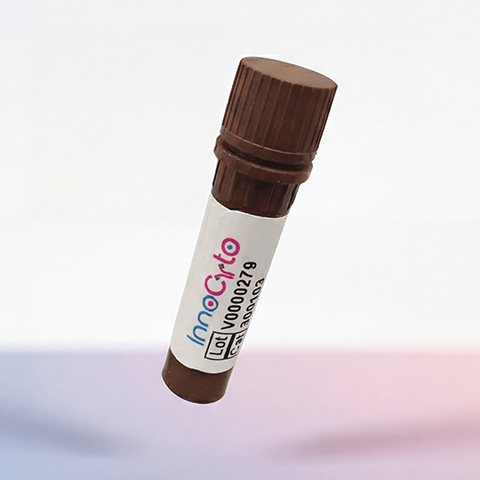
| Cat # | Size | Price | Quantity | |
|---|---|---|---|---|
| 518501 | 1 mg | $160 | ||
| 518502 | 5 mg | $400 | ||
| 518503 | 25 mg | $1100 |
| Clone | F3.3 |
|---|---|
| Application | Direct ELISA, functional assay, Flow Cytometry |
| Host Species | CHO cells |
| Reactivity | Human |
| Format | Liquid |
| Target Name | Major Histocompatibility complex II, human leukocyte antigen, HLA, MHC class II |
| Product Description | In vivo Grade Recombinant Anti-Human HLA-DR/DP/DQ Monoclonal Antibody |
| Isotype | Mouse IgG1 Kappa |
| Antibody Type | Recombinant |
| Regulatory Status | RUO |
| Purity | >95% by reducing SDS-PAGE |
| Endotoxin | < 1 EU per 1 mg of the protein by the LAL method. |
| Storage Conditions | 4ºC |
| Grade | In vivo |
| Recommended Usage | This product is suitable in in vitro functional assays or in vivo on human cells used in animal models. Optimal amounts need to be determined empirically for each experiment. |
| Research Areas | Antigen presentation, Dendritic cells, B cells, monocytes, macrophages, Autoimmunity, Cancer Immunology |
| See All Formats | Clone F3.3 |
HLA-DR, HLA-DP, and HLA-DQ are the classical human leukocyte antigen (HLA) class II molecules that play a central role in the adaptive immune system by presenting extracellular peptide antigens to CD4⁺ T helper cells. Encoded within the MHC class II region on chromosome 6, these molecules are expressed primarily on professional antigen-presenting cells such as dendritic cells, macrophages, and B cells. Their main function is to initiate immune responses against pathogens, maintain tolerance to self-antigens, and regulate immune-mediated signaling within tissues.
Structurally, HLA class II molecules are heterodimers composed of two non-covalently associated transmembrane glycoprotein chains: an alpha (α) chain and a beta (β) chain. The α1 and β1 domains form the peptide-binding groove, which accommodates peptides typically 13–25 amino acids long. Each HLA-II is encoded by distinct gene pairs: HLA-DRA and -DRB for HLA-DR, HLA-DPA and -DPB for HLA-DP, and HLA-DQA and -DQB for HLA-DQ. These molecules assemble in the endoplasmic reticulum and are stabilized by the invariant chain (Ii), which prevents premature peptide binding. In late endosomes, Ii is degraded, and peptides generated from extracellular antigens are loaded onto HLA-II molecules with the assistance of the peptide editor HLA-DM before being presented on the cell surface.
The ligands for HLA-DR, DP, and DQ are peptide antigens derived mainly from exogenous proteins internalized by antigen-presenting cells. These peptide-MHC II complexes are recognized by the T cell receptor (TCR) on CD4⁺ T helper cells, triggering their activation and cytokine release. This interaction bridges innate and adaptive immunity, shaping both humoral and cell-mediated responses.
Polymorphisms in HLA-DR, DP, and DQ genes have profound effects on disease susceptibility. Specific allelic variants are associated with autoimmune disorders, including type 1 diabetes (DR3-DQ2, DR4-DQ8), rheumatoid arthritis (DRB1*04), celiac disease (DQ2 and DQ8), and multiple sclerosis (DRB1*15). These associations arise because certain variants preferentially present self-peptides that activate autoreactive T cells. Conversely, HLA-II polymorphism contributes to protection against infections by broadening the range of peptides that can be presented to the immune system.
In therapeutic contexts, HLA-DR/DP/DQ typing is critical for transplantation compatibility, as mismatches can lead to graft rejection or graft-versus-host disease. Beyond transplantation, HLA-II molecules are vital in predicting immune responses to vaccines and designing antigen-specific immunotherapies. Advances in peptide-based vaccination and autoimmune disease treatments increasingly rely on identifying the precise peptide-HLA-II combinations that drive protective or pathogenic immune activation. Thus, HLA-DR, DP, and DQ remain central to understanding immune recognition, tolerance, and therapeutic modulation in human health and disease.
In Vivo Star Anti-Human HLA-DR/DP/DQ Antibody TDS
Anti-Human HLA-DR Antibody, Clone L243
iF488 Anti-Human HLA-DR Antibody, Clone L243
Anti-Human HLA-ABC Antibody, Clone W6/32
iF488 Anti-Human HLA-ABC Antibody, Clone W6/32
FITC Anti-Human HLA-ABC Antibody, Clone W6/32-RB
In Vivo Star Anti-Human HLA class II DR/DQ Antibody, Clone 9.3F10
In Vivo Star Anti-Human HLA Class I Heavy Chain Antibody, Clone HC10
Have a product or application question? Consult our FAQs or contact us.