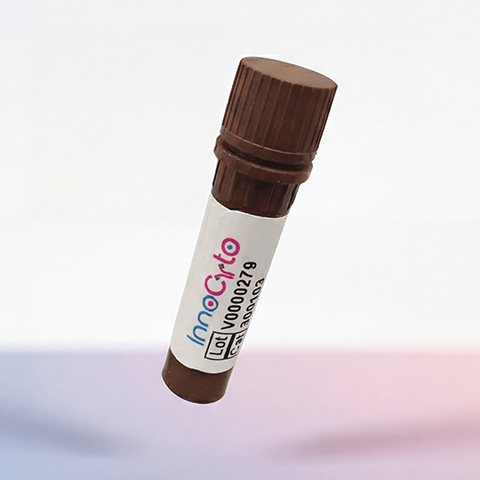
| Cat # | Size | Price | Quantity | |
|---|---|---|---|---|
| 502201 | 1 mg | $190 | ||
| 502202 | 5 mg | $590 | ||
| 502203 | 20 mg | $1390 |
| Clone | Durvalumab |
|---|---|
| Application | Flow cytometry, animal model study |
| Host Species | Mammalian cells |
| Reactivity | Human |
| Format | Liquid |
| Product Description | Durvalumab Biosimilar, PD-L1 Monoclonal Antibody |
| Isotype | Human IgG1 |
| Regulatory Status | RUO |
| Clonality | Recombinant |
| Immunogen | Human PD-L1 |
| Species specificity | Human |
| Purity | >95% by reducing SDS-PAGE |
| Grade | In vivo |
| Storage Conditions | 4ºC |
| Maximal Shelf Life | 12 months |
| Synonyms | CD274, B7-H1 |
| Target Name | PD-L1, PDL1 CD274, B7-H1 |
| Antibody Type | Recombinant |
| Research Areas | Activated T cells, Activated B cells, Monocytes, Macrophages, Dendritic cells, NK cells, Immune Checkpoints, Cancer Immunology |
| See All Formats | Clone Durvalumab |
Durvalumab is a fully human monoclonal antibody belonging to the immunoglobulin G1 kappa (IgG1κ) subclass, specifically engineered to target programmed death-ligand 1 (PD-L1). Structurally, Durvalumab is a glycoprotein with an approximate molecular weight of 149 kilodaltons (kDa). It is composed of two identical heavy chains and two identical light chains connected by interchain disulfide bonds, forming the Y-shaped quaternary structure typical of immunoglobulins. Each heavy chain contains one variable (VH) domain and three constant (CH1-CH3) domains, and each light chain contains a variable (VL) and constant (CL) domain. The antibody is produced in mammalian expression systems, such as Chinese Hamster Ovary (CHO) cells, which ensure correct folding, disulfide bond formation, and glycosylation consistent with human proteins.
The variable domains of Durvalumab contain complementarity-determining regions (CDRs) that confer high-affinity and selective binding to PD-L1. This interaction involves a combination of hydrogen bonds and hydrophobic contacts, allowing precise recognition of the ligand’s extracellular domain. Upon binding, Durvalumab inhibits the interaction between PD-L1 and its receptors, programmed death-1 (PD-1) and B7.1 (CD80). Blocking these ligand-receptor interactions prevents the inhibitory signaling pathway responsible for suppressing T-cell activation. In experimental systems, such blockade restores or maintains T-cell effector functions, illustrating the antibody’s role as a molecular modulator in immune checkpoint signaling studies.
Durvalumab’s Fc (fragment crystallizable) region retains the human IgG1 framework but is engineered to minimize immune effector mechanisms such as antibody-dependent cellular cytotoxicity (ADCC) and complement-dependent cytotoxicity (CDC). This is achieved through targeted amino acid substitutions that reduce binding affinity to Fc gamma receptors (FcγRs) and complement component C1q. The Fc domain also enables binding to neonatal Fc receptors (FcRn), extending the antibody’s half-life by promoting recycling and protecting it from lysosomal degradation. Overall, Durvalumab exemplifies precise monoclonal antibody design, with structural refinements that enhance target specificity, molecular stability, and functional control for mechanistic investigations of PD-L1-mediated immunoregulation.
Anti-Human PD-L1 (Durvalumab Biosimilar) TDS
Anti-Human CD80 (Galiximab Biosimilar), Clone Galiximab
Human B7-1 (CD80) Protein (C-His-Avi)
Biotin Human B7-1 (CD80) Protein (C-His-Avi)
Human B7-1 (CD80) Protein (C-His)
Anti-Human PD-L1 (Envafolimab Biosimilar), Clone Envafolimab
Have a product or application question? Consult our FAQs or contact us.