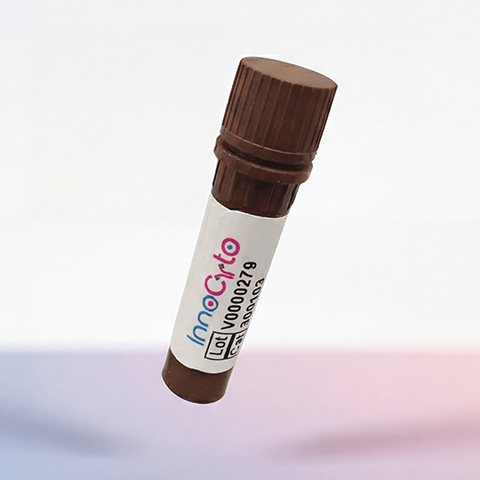
| Cat # | Size | Price | Quantity | |
|---|---|---|---|---|
| 501201 | 1 mg | $190 | ||
| 501202 | 5 mg | $590 | ||
| 501203 | 20 mg | $1390 |
| Clone | Camrelizumab |
|---|---|
| Application | Flow cytometry, animal model study |
| Host Species | Mammalian cells |
| Reactivity | Human |
| Format | Liquid |
| Product Description | Anti-Human PD-1 (Camrelizumab Biosimilar) |
| Isotype | Human IgG4 |
| Regulatory Status | RUO |
| Clonality | Recombinant |
| Immunogen | Human PD1 |
| Species specificity | Human |
| Purity | >95% by reducing SDS-PAGE |
| Grade | In vivo |
| Storage Conditions | 4ºC |
| Maximal Shelf Life | 12 months |
| Synonyms | CD279 |
| Target Name | PD1, PD-1, PDCD1, CD279, SLEB2 |
| Antibody Type | Recombinant |
| Research Areas | Immune Checkpoints, Activated T cells, Cancer Immunology, Tregs, Tfh cells, Activated B cells |
| See All Formats | Clone Camrelizumab |
Camrelizumab is a humanized monoclonal antibody that belongs to the immunoglobulin G4 (IgG4) subclass and is engineered to specifically bind to the programmed death-1 (PD-1) receptor on immune cells. Structurally, it is a full-length antibody composed of two identical heavy chains and two identical light chains, linked by disulfide bonds to form the characteristic Y-shaped structure of immunoglobulins. The molecule has a molecular mass of approximately 146 kilodaltons (kDa) and is produced using mammalian cell expression systems, such as Chinese Hamster Ovary (CHO) cells, to ensure proper glycosylation, folding, and structural stability.
The variable domains of the heavy (VH) and light (VL) chains contain complementarity-determining regions (CDRs) that form the antigen-binding site responsible for recognizing the PD-1 receptor with high affinity and specificity. This interaction is primarily stabilized by hydrogen bonding and hydrophobic contacts between the CDR loops of Camrelizumab and amino acid residues located on the extracellular domain of PD-1. This binding prevents PD-1 from interacting with its natural ligands, PD-L1 and PD-L2, which normally mediate inhibitory immune signaling. By blocking this receptor–ligand pathway, Camrelizumab modulates the signaling cascade that downregulates T-cell activation in immunological model systems.
Camrelizumab’s constant region, derived from the IgG4 isotype, confers specific biophysical properties. The IgG4 Fc region has been engineered with a stabilizing S228P substitution to prevent half-antibody formation, enhancing molecular integrity. Compared to IgG1 antibodies, the IgG4 subtype exhibits minimal effector functions such as antibody-dependent cellular cytotoxicity (ADCC) and complement-dependent cytotoxicity (CDC), ensuring that the molecule primarily functions through receptor blockade rather than immune cell recruitment. The Fc domain also interacts with neonatal Fc receptors (FcRn) to extend the half-life of the antibody through recycling processes. Overall, Camrelizumab exemplifies a rationally designed IgG4 monoclonal antibody optimized for structural stability, receptor selectivity, and precise modulation of PD-1–mediated immune pathways.
Anti-Human PD1 (Camrelizumab Biosimilar) TDS
Anti-Mouse CD274 (PD-L1) Antibody, Clone 10F.9G2
Biotin Anti-Mouse CD274 (PD-L1) Antibody, Clone 10F.9G2
Anti-Human PD-L1 (Atezolizumab Biosimilar), Clone Atezolizuma
Anti-Human PD-L1 (Avelumab Biosimilar), Clone Avelumab
Human PD1 (CD279) Protein (C-His-Avi)
Biotin Human PD1 (CD279) Protein (C-His-Avi)
Human PD1 (CD279) Protein (C-His)
Anti-Human PD1 (Cemiplimab Biosimilar), Clone Cemiplimab
Anti-Human PD1 (Nivolumab Biosimilar), Clone Nivolumab
Anti-Human PD1 (Pembrolizumab Biosimilar), Clone Pembrolizumab
Have a product or application question? Consult our FAQs or contact us.