| Cat # | Size | Price | Quantity | |
|---|---|---|---|---|
| 515101 | 1 mg | $1750 | ||
| 515102 | 5 mg | $5950 | ||
| 515103 | 25 mg | $17850 |
| Clone | 10F.9G2 / DC101 |
|---|---|
| Application | Functional assay, animal model study |
| Host Species | CHO cells |
| Reactivity | Mouse |
| Format | Liquid |
| Target Name | PD-L1, PDL1 CD274, B7-H1, VEGFR2, VEGF-R2, KDR, Tyrosin kinase growth factor receptor, homolog of FLK1 (FLK1), VEGFR |
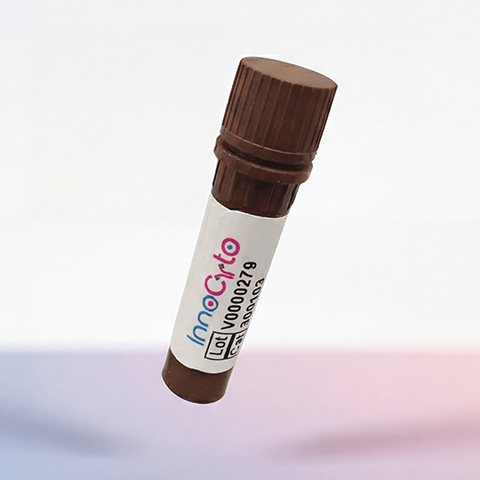
| Product Description | In Vivo Grade Recombinant Anti-mouse PD-L1 / VEGFR-2 Bispecific Antibody |
| Isotype | Mouse IgG2c LALAPG Kappa |
| Antibody Type | Recombinant |
| Regulatory Status | RUO |
| Purity | >95% by reducing SDS-PAGE |
| Endotoxin | < 1 EU per 1 mg of the protein by the LAL method. |
| Storage Conditions | 4ºC |
| Grade | In vivo |
| Recommended Usage | This product is suitable for in vivo animal use. Optimal amounts need to be determined empirically for each experiment. |
| Research Areas | Activated T cells, Activated B cells, Monocytes, Macrophages, Dendritic cells, NK cells, Immune Checkpoints, Cancer Immunology |
| See All Formats | Clone 10F.9G2 / DC101 |
Programmed Death-Ligand 1 (PD-L1), also known as CD274, is a transmembrane glycoprotein expressed on tumor cells, antigen-presenting cells, and various stromal components within the tumor microenvironment. Its primary role is to interact with the immune checkpoint receptor PD-1 on activated T cells, leading to suppression of T cell proliferation, cytokine production, and cytotoxic activity. This mechanism forms part of a natural pathway to maintain immune homeostasis and prevent autoimmunity. However, many cancers exploit the PD-1/PD-L1 axis to escape immune surveillance by overexpressing PD-L1, effectively rendering tumor cells invisible to cytotoxic T cell attack. Blocking PD-L1 signaling restores T cell activity, unleashing potent anti-tumor responses, an effect that has revolutionized cancer treatment through antibodies such as atezolizumab and durvalumab.
Vascular Endothelial Growth Factor Receptor 2 (VEGFR2), also known as KDR or Flk-1, is a receptor tyrosine kinase predominantly expressed on endothelial cells. It is the primary mediator of vascular endothelial growth factor A (VEGF-A) signaling, regulating angiogenesis, vascular permeability, and endothelial cell proliferation. In physiological contexts, VEGFR2 is essential for embryonic development and tissue repair. In tumors, however, VEGFR2-driven signaling leads to the formation of abnormal and leaky vasculature that facilitates tumor growth, metastasis, and a hypoxic microenvironment. This abnormal vasculature also hinders effective infiltration of immune cells into the tumor, further promoting immune evasion.
A bispecific antibody targeting PD-L1 and VEGFR2 offers a highly synergistic therapeutic strategy that integrates immune checkpoint blockade with angiogenesis inhibition. By simultaneously blocking PD-L1, the antibody reactivates exhausted T cells and restores adaptive immune function against tumor cells. Concurrent inhibition of VEGFR2 normalizes tumor vasculature, improving oxygenation and immune cell entry into the tumor microenvironment. This dual modulation transforms immune-excluded or “cold” tumors into immune-inflamed or “hot” tumors that are more susceptible to immune attack. Moreover, combining these mechanisms in a single bispecific antibody ensures co-localized pharmacologic activity within tumors, potentially reducing systemic toxicity and overcoming resistance that often arises when these pathways are targeted separately. Early clinical development of PD-L1 × VEGFR2 bispecific antibodies is showing promise in solid tumors such as non-small cell lung cancer and hepatocellular carcinoma, where interplay between angiogenesis and immune suppression is particularly strong. This dual blockade represents a next-generation immunotherapy concept aimed at reprogramming the tumor microenvironment for durable and comprehensive anti-cancer efficacy.
In Vivo Star Anti-Mouse CD274 (PD-L1) / VEGFR-2 Bispecific Antibody TDS
Anti-Mouse CD274 (PD-L1) Antibody, Clone 10F.9G2
Biotin Anti-Mouse CD274 (PD-L1) Antibody, Clone 10F.9G2
Anti-Human PD-L1 (Atezolizumab Biosimilar), Clone Atezolizuma
Anti-Human PD-L1 (Avelumab Biosimilar), Clone Avelumab
Anti-Human VEGFR-2 (Ramucirumab Biosimilar), Clone Ramucirumab
Human PD-L1 (CD274) Protein (C-His)
Human PD-L1 (CD274) Protein (C-His-Avi)
Biotin Human PD-L1 (CD274) Protein (C-His-Avi)
PE Human PD-L1 (CD274) Protein (C-His)
APC Human PD-L1 (CD274) Protein (C-His)
Have a product or application question? Consult our FAQs or contact us.